If You Think in Words You Hear, Not Words You See, You Should Be Dictating Everything
Some people think in written text. Others think in speech they hear internally. If you're the second type, voice dictation doesn't just save time — it removes a fundamental friction from how you work.
SERP Transcribe Team
Product
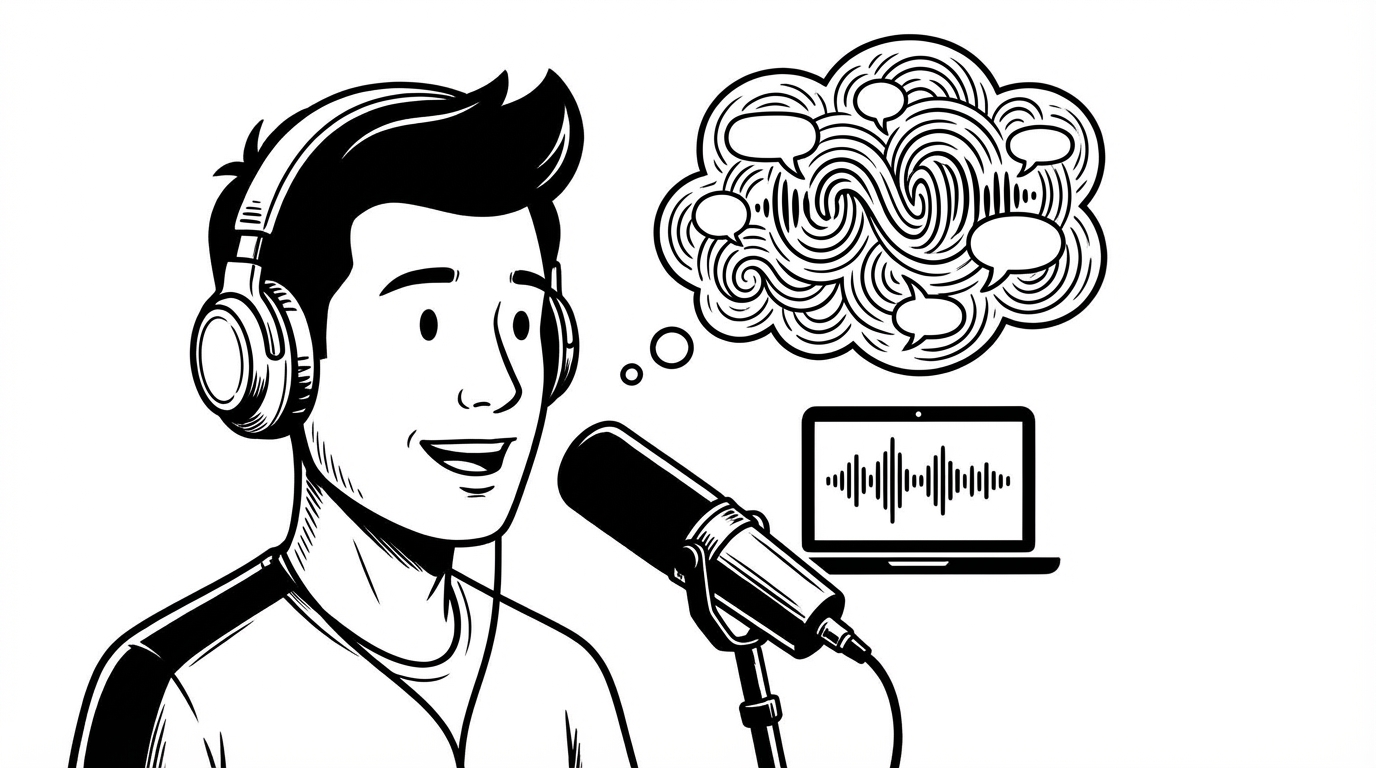
There's a meaningful difference in how people think internally. Some people think primarily in visual terms — mental images, diagrams, spatial arrangements. Some think in abstract patterns. And some — a significant portion of the population — think primarily in language they "hear" internally: an inner voice narrating, explaining, arguing, and composing.
If you're in the last group, typing is a form of translation. Your thoughts arrive as speech. You then have to slow them down, encode them into finger movements, and output them character by character. The gap between how fast your thoughts arrive and how fast you can type them out is a constant source of friction.
Voice dictation, for this type of thinker, isn't just faster. It removes a fundamental mismatch between how thought arrives and how it gets expressed.
The Inner Voice and Working at Thought Speed
When a strong verbal thinker has an idea, it arrives as a kind of internal statement or sentence — "the problem with this approach is that it assumes the user already knows what they want, which they usually don't." That thought is complete and fully formed. The thinker then has to type it out at 60 words per minute, and by the time they're done, three more thoughts have queued up and at least one has been partially lost.
Voice dictation lets verbal thinkers output at something close to thought speed. The internal monologue that was always there now has a direct output channel. The queue clears instead of backing up.
Who This Describes
This pattern shows up reliably in:
People who are better at talking than writing. If you can articulate something clearly in a meeting but find writing the same thing hard, you're probably a verbal thinker who's translating speech into text when you write. Voice removes that translation step.
People who "hear" their writing as they compose. If you notice yourself internally saying each word as you type it, you're a verbal processor. The internal narration is already happening — voice dictation just makes it the output instead of the internal commentary.
People with ADHD or dyslexia. Both conditions frequently involve a mismatch between verbal processing speed and written output speed. Thoughts arrive faster than they can be encoded into text, leading to losing ideas mid-sentence or getting stuck on word retrieval while the thought is still warm. Voice dictation compresses the gap significantly.
Strong speakers, reluctant writers. Consultants, lawyers, executives who are excellent on their feet in a meeting but find writing laborious — the laboriousness is often translation cost, not thinking cost. They have the thoughts. They have the words. The typing is the bottleneck.
What Changes When the Translation Is Removed
Verbal thinkers who switch to voice dictation often describe a specific experience: things that were previously hard to write feel easy. Not because they suddenly became better writers — because the friction that was making writing feel hard was the translation step, not the thinking step.
The consultant who struggled to write client reports for years finds that speaking them takes a quarter of the time and the quality is the same or better. The manager who stared at a blank screen before every performance review dictates a complete draft in ten minutes. The student who couldn't get past the first paragraph speaks a complete essay in fifteen minutes.
The thinking was never the problem. The encoding was.
The Surprising Quality Effect
A counterintuitive finding among verbal thinkers who switch to dictation: their written quality often improves. Not because the transcription is more polished than their typed prose — it usually isn't, at least initially — but because they stop constraining what they say to what they can hold in their head while typing.
When you're verbal and you type, you compose a sentence, type it, and the next thought has to wait. Thoughts that arrived while you were typing the previous sentence are often simplified or dropped — the working memory can only hold so much. Voice lets the full chain of thought land in one burst. The result is more complete, more nuanced, and more connected than the edited-for-typing-speed version would have been.
The Practical Implication
If you recognize yourself in this — if you think in an inner voice, if talking is easier than writing, if your best ideas come out in conversation rather than in documents — voice dictation is more than a productivity tool. It's an alignment between your natural cognitive mode and your output method.
The friction you've been experiencing as "I'm bad at writing" or "I struggle to express myself in text" is quite possibly not a thinking problem. It's a translation problem. Voice dictation removes the translation.
Try dictating your next email. Notice whether the words come more easily than when you type them. That notice is usually the moment people realize this tool is for them.