Customer Support Reps: Close Tickets Faster With Voice Dictation
Support agents write hundreds of messages per week. Voice dictation changes the equation — faster responses, more personal tone, and less typing fatigue at the end of the day.
SERP Transcribe Team
Product
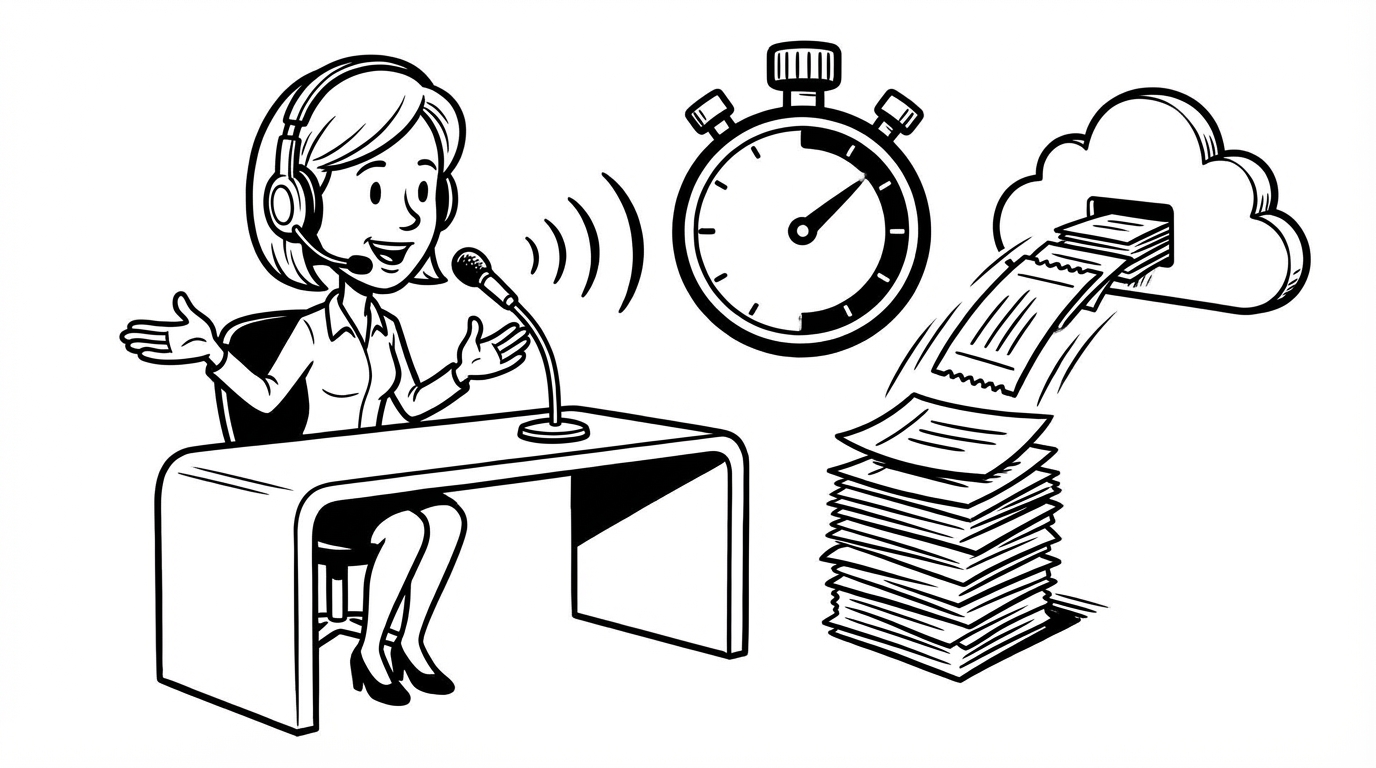
Customer support is one of the most writing-intensive jobs in any company. A busy support agent writes hundreds of messages per week — responses to tickets, follow-ups, internal notes, escalation summaries. Most of it is individualized: the same product problem answered differently depending on the customer's context, level of frustration, and what they actually need.
Templates handle the simple end of this. Voice dictation handles everything else.
The Support Agent's Writing Problem
The core tension in support writing is speed vs. quality. Faster responses improve customer satisfaction metrics. More personal, thoughtful responses resolve issues more effectively and reduce follow-up tickets. Templates optimize for speed at the cost of personalization. Fully custom responses are better but take longer.
Voice dictation shifts the trade-off. A personalized response that would take 4 minutes to type takes 60–90 seconds to dictate. You're not choosing between speed and quality — you can have both for the same time cost.
Ticket Responses by Voice
The workflow: read the ticket, hold the hotkey, speak the response as if you're talking to the customer directly.
"Hi Marcus, thanks for reaching out. I completely understand the frustration — you signed up for the annual plan expecting the premium features to be available immediately and they weren't, which is definitely not the experience we want. What happened is that the billing confirmation email triggered before our system had fully activated your account. I've just manually upgraded your account and you should have access to all premium features right now. Could you refresh and let me know if you're able to see the Analytics tab? Happy to stay on this until it's fully resolved."
That response — warm, specific, apologetic, action-taken, clear next step — took about 30 seconds to speak. It addresses the complaint, explains what happened, and confirms action taken. It's the kind of response that resolves in one round rather than three.
Internal Notes and Escalation Summaries
When escalating a ticket or handing off to another team, the internal note matters as much as the customer response. A complete, well-written handoff note prevents the customer from having to repeat themselves and prevents the next agent from starting from scratch.
Voice is fast for these:
"Escalating to billing. Customer signed up for annual plan 3 days ago, billing email confirmed but account didn't activate premium tier — appears to be a webhook failure. I've manually upgraded but they're asking about a refund of the price difference between monthly and annual rate for the 3 days they were on monthly features. That's outside my authorization. Account: #48271, customer email is in ticket."
Dictated in 20 seconds. Complete, actionable, accurate.
Typing Fatigue Is Real
Support agents who type all day report significant finger, wrist, and shoulder fatigue by the end of a shift. This isn't just uncomfortable — it affects output quality. The 800th word of the day comes out worse than the 100th, and customers late in the queue get a less good experience than customers earlier.
Voice dictation distributes the physical load differently. Speaking doesn't fatigue the same way typing does. Agents who switch to voice for the majority of their responses report meaningful reduction in physical fatigue and more consistent quality throughout the shift.
Where Templates Still Win
Templates are still the right tool for truly repetitive, standardized responses — password reset instructions, shipping timeframe disclosures, the standard "we've received your request and will respond within 24 hours" acknowledgment.
Voice dictation is the right tool for everything that requires actual reading, thinking, and a personalized response. That's most real support work, but not all of it.
Response Time Metrics
If your team tracks average handle time or first-response time, voice dictation can meaningfully move those numbers. Responses that take 5 minutes to type take 90 seconds to speak. For a 40-ticket day, that's a significant reduction in time-on-keyboard without reducing response quality.
The quality benefit compounds: faster, more personal responses get resolved in fewer rounds. Fewer rounds mean fewer total tickets handled per issue, which frees capacity for the next customer.
The Voice That Customers Respond To
The most common complaint about customer support is that it feels scripted and impersonal. Dictated responses don't feel scripted — they feel like a person talking to you, because they are. The spoken-then-transcribed response has a warmth and directness that careful typed composition often loses.
That distinction matters for customer satisfaction. A response that feels like a human wrote it — that uses your name, references your specific situation, doesn't sound like a template — resolves issues faster and leaves customers feeling better about the experience.
Voice dictation makes human-sounding responses fast enough to do at scale.