Event Planners: Write Vendor Emails and Run-of-Show Notes Faster by Voice
Events generate hundreds of written communications — vendor coordination, venue logistics, client updates, day-of notes. Voice dictation keeps you on top of all of it.
SERP Transcribe Team
Product
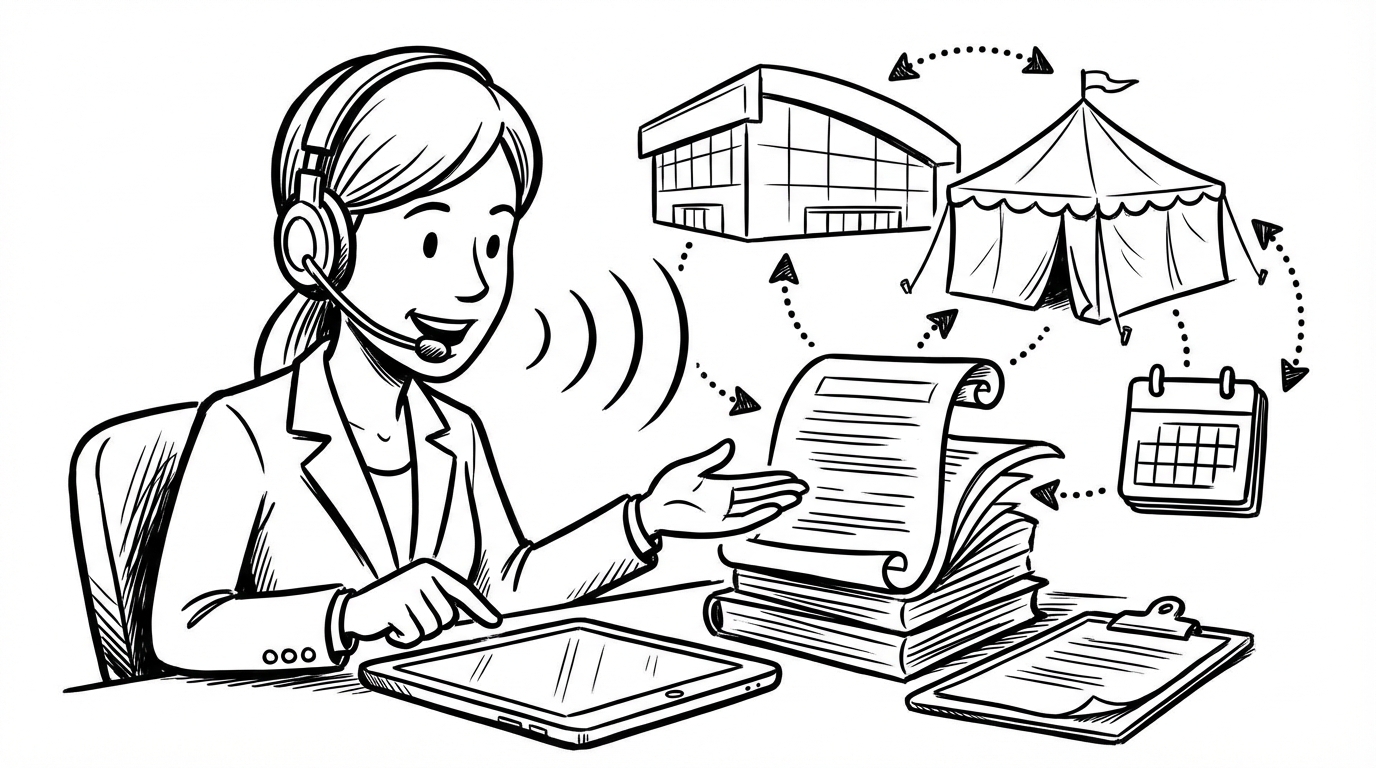
Event planning is one of the highest-volume communication jobs there is. A single mid-sized event might involve 15–20 vendors, a client with multiple stakeholders, and hundreds of emails and messages between conception and execution. Each event runs in parallel with others. The communication never stops.
Voice dictation doesn't simplify events. It makes the communication side fast enough that you can manage higher volume without dropping balls.
Vendor Coordination Emails
Vendor emails — confirming bookings, requesting quotes, following up on deliverables, communicating logistics changes — are the backbone of event planning communication. They need to be specific, professional, and sent promptly. Voice handles all three:
"Hi Marcus, following up on the AV quote for the Johnson wedding on April 12th. We discussed a four-camera setup with live switching, two LED walls, and a DJ package. I need the final itemized quote by Wednesday so I can get client approval before the end of the week. Also — can you confirm whether your team will handle load-in Thursday evening or Saturday morning? That affects the venue setup schedule. Let me know, thanks."
Specific, professional, actionable. 20 seconds to speak. The email that would sit in your drafts because you haven't had time to write it gets sent the same day.
Venue Communication
Venue coordinators need regular updates — headcounts, timing changes, catering adjustments, layout modifications. Voice makes each touchpoint fast:
"Hi Jennifer, wanted to update you on the Morrison event on the 18th — final headcount is 148, up slightly from the 140 we estimated. Please add two rounds to the main room setup. I also want to confirm the bar package — we've moved from the standard to the premium package, which includes the sparkling wine service. And we'll need the venue open for vendor access by 10am, the florals are arriving early. Can you confirm all of this?"
30 seconds spoken. Complete update, clear asks, moves everything forward.
Run-of-Show Documents
Run-of-show documents — the minute-by-minute timeline of event execution — require detailed prose to be actually useful on the day. Voice dictation is well-suited to building these out:
"3:00 PM — Venue access begins. AV team load-in, Marcus and crew. Florals delivery, Sarah's team, direct to ballroom. 3:30 PM — Catering setup begins, main dining room and cocktail area. 5:00 PM — Final venue walkthrough with coordinator. Sound check. 5:30 PM — Venue lockdown, staff briefing in service corridor. 6:00 PM — Doors open, cocktail hour begins, string quartet starts..."
Speak each line as you're building the timeline. The document writes itself alongside your planning rather than being a separate documentation task.
Day-Of Notes and Incident Capture
During an event, things change and issues arise. Voice capture of real-time notes — problems addressed, vendor timing, client requests, things to follow up — produces a much more complete event record than trying to type during execution:
"4:47 PM — Florist running 20 minutes late, adjusted cocktail hour start by 15 minutes, notified client. 5:15 PM — AV tech issue with the wireless mic, resolved by 5:30. 7:20 PM — Client requested one additional round of champagne service for the toasts, confirmed with bar manager."
These notes, captured in real time by voice, become the post-event report and protect you if any disputes arise about what happened when.
Client Update Emails
Keeping clients informed throughout the planning process is the communication that builds trust and prevents the "I didn't know about that" conversation. Voice makes regular touchpoints practical:
"Hi Sarah, quick update on your July 15th event. Everything is confirmed with the venue, catering, and the band — I'm attaching the final vendor contracts for your records. We're right on schedule. One thing to decide before the end of the month: the cocktail hour music — do you want the band to play acoustic sets, or should we book a separate acoustic duo for that portion? Let me know your preference and I'll finalize that booking."
Warm, specific, one clear ask. 25 seconds to speak. The client feels on top of their event and you've advanced a decision that needs to be made.
Post-Event Wrap-Up
Post-event documentation — vendor feedback, what worked, what didn't, the timeline vs. actuals — is the institutional knowledge that makes the next event smoother. It rarely gets written because the team is exhausted after execution.
Voice capture immediately after the event, while it's still fresh, produces the wrap-up notes that would otherwise get lost:
"Johnson wedding post-event notes. Overall very successful. AV team Marcus — excellent, no issues after the early mic problem. Caterer Jennifer — food quality outstanding but slightly slow on second course, flag for next booking. Florist Sarah — the 20-minute delay created stress, need to build more buffer into the timeline for floral delivery. Venue coordinator was exceptional. Client was thrilled. Lessons for next time: earlier florist arrival window, confirm mic check is completed 90 minutes before doors, not 60."
Three minutes of speaking immediately after load-out. The entire team's institutional learning is captured before everyone goes home and forgets it.