Ghostwriting Faster With Voice Transcription
How ghostwriters use voice dictation and transcription to increase output, capture client voice more accurately, and scale their writing business.
SERP Transcribe Team
Product
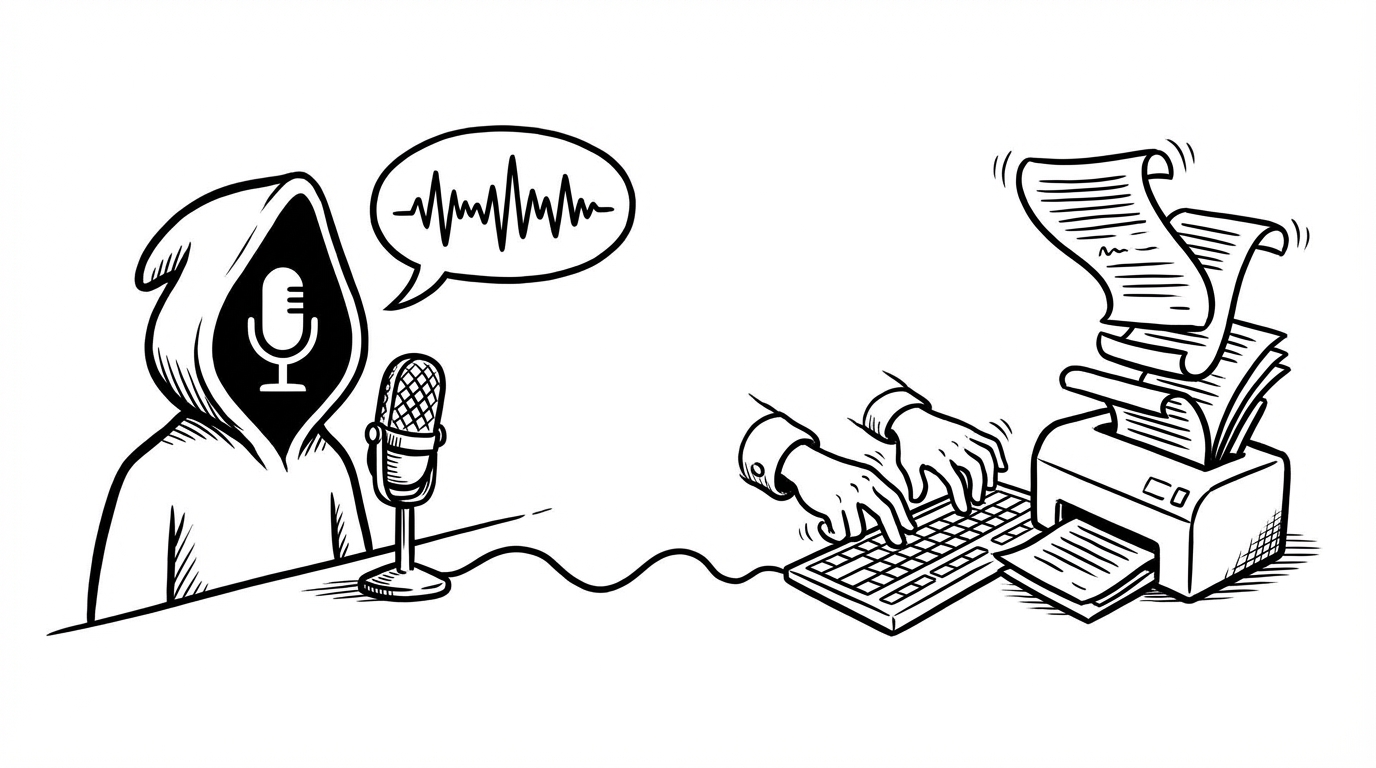
Ghostwriting is a volume business. Your income is a function of how much quality content you can produce per hour. Anything that reduces the time between "I understand what this client wants" and "the draft is done" directly improves your margins.
Voice dictation is one of the highest-leverage tools available to working ghostwriters. Here's how experienced ghostwriters use it across their workflow.
Where Ghostwriters Spend Their Time
A typical ghostwriting project involves several phases:
- Discovery and briefing — understanding the client's voice, topic, and goals
- Research and outlining — gathering material and structuring the piece
- First draft — writing the actual content
- Revision — incorporating client feedback
- Finalization — polish and handoff
Most ghostwriters' time is concentrated in phases 3 and 4. Voice dictation helps most with drafting (phase 3) but also speeds up the research and communication phases when used consistently.
Dictating First Drafts
For a 1,500-word blog post, a ghostwriter who types at 80 WPM needs roughly 45–60 minutes for a clean first draft (accounting for thinking time, not just raw word production). Speaking at 140 WPM with a clean keyboard pass afterward brings that to 25–35 minutes for the same deliverable.
That's 20–30 minutes saved per piece. At 5 pieces per week, that's 100–150 hours freed per year. For a ghostwriter billing $75–150/hour, that's significant.
The workflow: review your brief and outline, then dictate section by section, speaking as if you're explaining the client's ideas to their target audience. The client voice comes through in the editing pass.
Capturing Client Voice With Dictation
One of the hardest parts of ghostwriting is capturing a client's voice accurately. Many ghostwriters use a discovery call or interview to understand how the client speaks — their patterns, their vocabulary, their cadence.
Voice dictation is a useful tool in this phase:
Option 1: Record the discovery call and transcribe it. Review the transcription for signature phrases, sentence structures, and vocabulary the client uses repeatedly. Use those in the draft.
Option 2: Voice-mimic while dictating. After enough discovery calls, some ghostwriters can speak in their client's register naturally while dictating. They're not impersonating the client — they're just speaking with that person's vocabulary and energy in mind. The result is often closer to the client's voice than a typed draft because it came from a speaking mode rather than a writing mode.
Client Interview Transcription
Many ghostwriters conduct interviews with their clients as source material for books, articles, and LinkedIn content. The interview generates the ideas; the ghostwriter shapes them into publishable prose.
For this workflow, transcription (not dictation) is the primary tool. Record the interview, transcribe it, use the transcription as raw material. SERP Transcribe is designed for live dictation rather than file transcription, so for this specific step, a dedicated transcription tool handles the audio file. SERP Transcribe then becomes useful in the drafting phase that follows — shaping the transcribed interview material into publishable prose.
Revision Notes by Voice
Client feedback rounds are a significant time sink in ghostwriting. The back-and-forth of understanding what the client wants changed, internalizing it, and then rewriting takes hours.
Dictating your revision plan before you execute it saves time and reduces errors:
After reviewing client feedback, hold the hotkey and speak your understanding: "Okay, they want the opening section rewritten to be more personal — they want to start with a story from their career. The second section is fine. The third section needs the numbers updated — I need to look up the current stats. The CTA at the end should be softer, less salesy, more invitation."
That dictated revision plan pastes into a scratch doc and serves as your checklist. You catch misunderstandings before you do the work rather than after.
Scaling Your Output
For ghostwriters who want to scale beyond their current volume, dictation is often the most effective single change. The math is stark: if you can produce two pieces in the time it used to take you to produce one, you either double your revenue at the same hours or maintain your current revenue at half the hours.
The limit on most ghostwriting businesses isn't demand — it's the writer's capacity. Dictation expands that capacity without burning out.
Practical Setup for Ghostwriters
Keep a client voice file. For each ongoing client, maintain a short doc with their signature phrases, topics to avoid, preferred examples, and register notes. Review it before each dictation session to prime your speaking mode for that client.
Use separate documents for separate phases. Dictate your first pass into a scratch doc, not directly into your client deliverable. Clean up in the scratch doc, then transfer the polished draft to the deliverable. This keeps your working process separate from what the client sees.
Time yourself. Track your words-per-hour before and after adding dictation to your workflow. The numbers are motivating and help you price projects accurately once your speed improves.
Ghostwriting is competitive. Speed, quality, and reliability are what keep clients. Voice dictation improves all three: you're faster, your drafts often sound more natural, and you can deliver on tighter timelines.