How OpenAI's Whisper Changed Voice Dictation Forever
In 2022, OpenAI released a speech recognition model that made modern dictation tools possible. Here's what changed and why it matters for anyone using voice-to-text today.
SERP Transcribe Team
Product
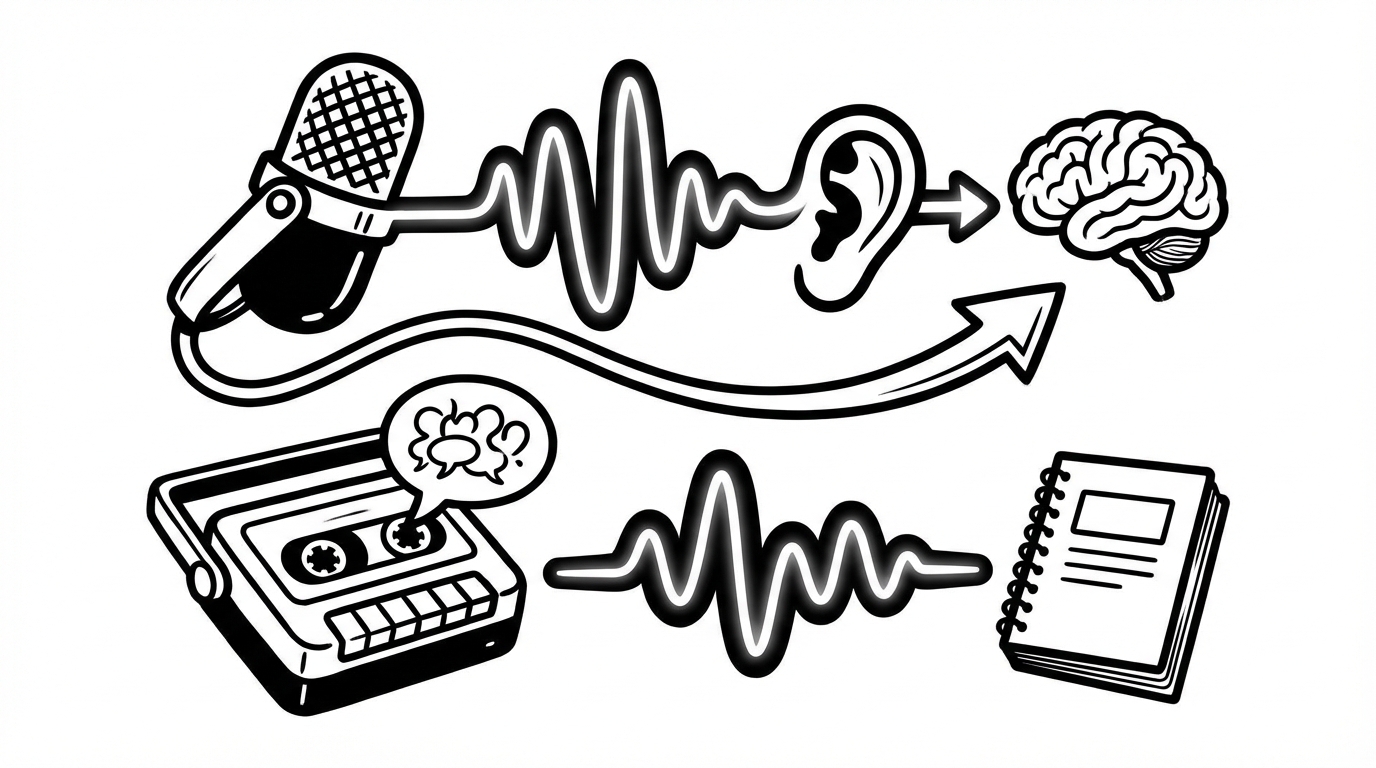
If you've noticed that voice dictation has gotten dramatically better in the last few years — more accurate, more natural, better with accents — there's a specific reason for it. OpenAI released an open-source speech recognition model called Whisper in September 2022, and it was a step change in what was possible.
Most modern dictation tools, including SERP Transcribe, are built on or inspired by Whisper or the techniques it pioneered. Understanding what changed and why helps you use these tools more effectively and set appropriate expectations.
What Came Before Whisper
Prior to 2022, the best speech recognition systems were trained primarily on carefully curated, clean audio datasets. This worked well for standard American English spoken clearly in quiet conditions — which is why old Dragon Dictation and Google Voice were impressive in demos but inconsistent in real-world use.
Real-world speech is different from demo speech: it includes accents, background noise, hesitations, non-standard vocabulary, varying microphone quality, and code-switching between languages. Training datasets that didn't include these characteristics produced models that couldn't handle them well.
The result was a generation of voice dictation tools that worked well for some speakers in ideal conditions and poorly for many speakers in real conditions.
What Whisper Did Differently
OpenAI trained Whisper on 680,000 hours of audio pulled from the internet — a dataset roughly 100 times larger than what previous open-source models trained on, and far more diverse in speakers, accents, recording conditions, and languages.
The practical results:
- Significantly better accuracy for non-American English accents
- Much better performance in noisy environments
- Better handling of technical vocabulary and proper nouns
- Support for 99 languages, with quality that varies but covers the major ones well
- Open-source release — anyone could build on it
The last point is crucial. By releasing Whisper openly, OpenAI created a foundation that developers could build production-quality dictation tools on without needing to invest in building their own speech recognition from scratch. This accelerated the entire category.
The Generation of Tools It Enabled
Within months of Whisper's release, a new generation of dictation tools appeared. They ranged from simple wrappers around the model to sophisticated applications with custom inference engines, UI design, and workflow integrations.
What they had in common: accuracy that was genuinely in a different class from what existed before, for a much wider range of speakers and conditions.
This is the market you're buying into when you download a modern dictation tool in 2026. The foundation models are better than they were three years ago, and they're better for more people.
Why Accuracy Is Still Not 100%
Whisper represents a major improvement but not perfection. It still struggles in some cases:
Heavy accents with specific phonological differences from the training distribution perform worse than mainstream accents. The gap has narrowed dramatically, but it exists.
Background noise at high levels degrades performance despite the improvement. A quieter environment and a good microphone still matter.
Rare proper nouns and technical terminology — names of obscure people, places, and domain-specific technical terms — are still challenging because they appear rarely or never in training data.
Low-quality microphone audio — the model receives degraded input and produces degraded output.
These aren't failures of the technology; they're the current state of a rapidly improving system. Each successive version of Whisper-based models improves on these specific weaknesses.
What This Means for You
The practical takeaway: modern dictation tools built on Whisper-based models are accurate enough for real-world daily use for most speakers. The accuracy threshold that makes voice dictation genuinely faster than typing (roughly 95%+) is now achievable for a much broader population than it was in 2021.
The remaining accuracy factors are mostly in your control: microphone quality, background noise level, and speaking pace. The model itself is good enough for the task — what limits performance is usually the audio input quality.
The category is still improving. Each major Whisper release has brought measurable accuracy gains, and the best dictation tools continue to add custom vocabulary, tone adjustment, and AI-enhanced output that goes beyond raw transcription.
2022 was when modern voice dictation became viable. 2026 is when it's becoming normal.