Insurance Agents: Write Claims Notes and Client Communications Faster by Voice
Policy reviews, claims documentation, follow-up emails, client updates — insurance work generates a constant stream of writing. Voice dictation cuts through it.
SERP Transcribe Team
Product
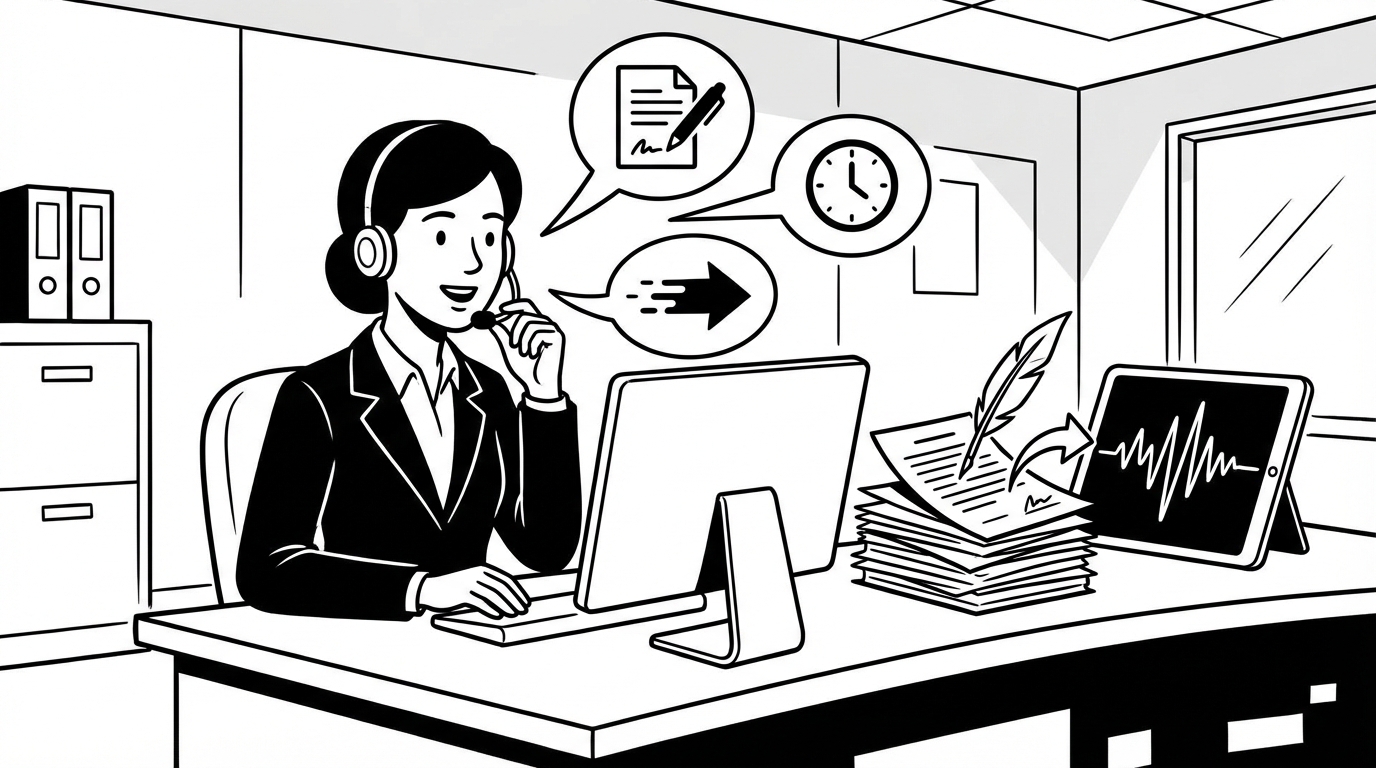
Insurance work — whether you're a claims adjuster, a broker, or an independent agent — involves a significant amount of writing. Client interaction notes, claims documentation, policy explanations, follow-up communications, coverage summaries. It's relationship-intensive work with a heavy administrative layer.
Voice dictation reduces the time cost of that administrative layer without cutting corners on thoroughness or accuracy.
Claims Documentation
Claims documentation is where accuracy and timeliness both matter. Notes written immediately after a claims interaction are more accurate than notes written at the end of a busy day from memory — details are fresh, specifics are captured, and the sequence of events is clear.
Voice capture immediately after each claims interaction:
"Claims call with Jennifer Walsh, policy number 847-223-1. She's reporting water damage from a burst pipe in the kitchen, discovered this morning. Damage to flooring, cabinets, and some drywall. She's already turned the water off and called a plumber. I've confirmed coverage under her HO-3 policy, subject to the $1,000 deductible. Assigned adjuster Marcus Williams — she'll hear from him within 24 hours. Action items: confirm adjuster assignment, send her the claims process overview email, note the date of loss as today."
That's a complete, specific interaction record. Spoken in 35 seconds. Typed at end of day it would have been shorter, less specific, and missing the action items.
Policy Review Notes
After a policy review meeting with a client, voice capture covers what was discussed, what changes were recommended, what the client decided, and what follow-ups are needed:
"Annual review with David and Helen Park, Tuesday 2pm. Reviewed home, auto, and umbrella. Home coverage is adequate — no changes. Auto: David bought a new vehicle in October that was added mid-term but we should review whether the liability limits still make sense given the umbrella. Helen mentioned they're considering a vacation rental property — I need to send them information on landlord coverage. Umbrella: currently at $1M, discussed increasing to $2M given David's business ownership. They want to think about it. Follow up in two weeks."
Complete, actionable, specific. The meeting is fully documented in 40 seconds.
Client Follow-Up Emails
Insurance clients often need follow-up communications after interactions — coverage confirmation, next steps after a claim, answers to questions raised in a review. These emails need to be accurate, professional, and personal enough to feel like individual attention rather than form letters.
Voice handles this naturally. Speak the email the way you'd explain it on the phone:
"Hi David, great speaking with you today. As discussed, I'm following up on two things — first, I'll run a comparison on the auto liability limits now that you have the new vehicle, and I'll have that to you by Thursday. Second, I've attached some information on our landlord policy for the vacation rental you're considering. Happy to walk through it on a call if helpful. Looking forward to talking again soon."
Warm, specific, professional, and done in 20 seconds.
Coverage Explanations and Quotes
When writing a coverage explanation or a quote summary, speaking it first often produces clearer language than typing it. You're explaining something you know well — the words come naturally when you speak, and the result sounds less like insurance jargon and more like one person explaining something to another.
The Relationship Business Reality
Insurance is a relationship business. Clients stay with agents who feel attentive, responsive, and knowledgeable. The quality of your follow-up communications and your documentation of their situation directly affects whether they renew, refer others, and trust you with additional coverage.
Voice dictation gives you the capacity to be more thorough and more responsive without extending your day. Better notes, faster emails, more consistent follow-through — all of it contributes to the relationship quality that drives retention.
E&O Protection
Errors and omissions documentation is a real consideration for insurance professionals. Clear, contemporaneous notes of what was discussed, what was recommended, and what the client decided are your protection in the event of a dispute.
Voice capture immediately after each client interaction produces the kind of specific, dated, contemporaneous record that matters for E&O purposes. It's documentation discipline that voice makes practical to maintain consistently.