Why Most Knowledge Workers Will Use Voice Input Within Five Years
Voice dictation used to be a niche tool. In 2026, accuracy is high enough, tools are good enough, and the productivity case is strong enough that adoption is accelerating fast.
SERP Transcribe Team
Product
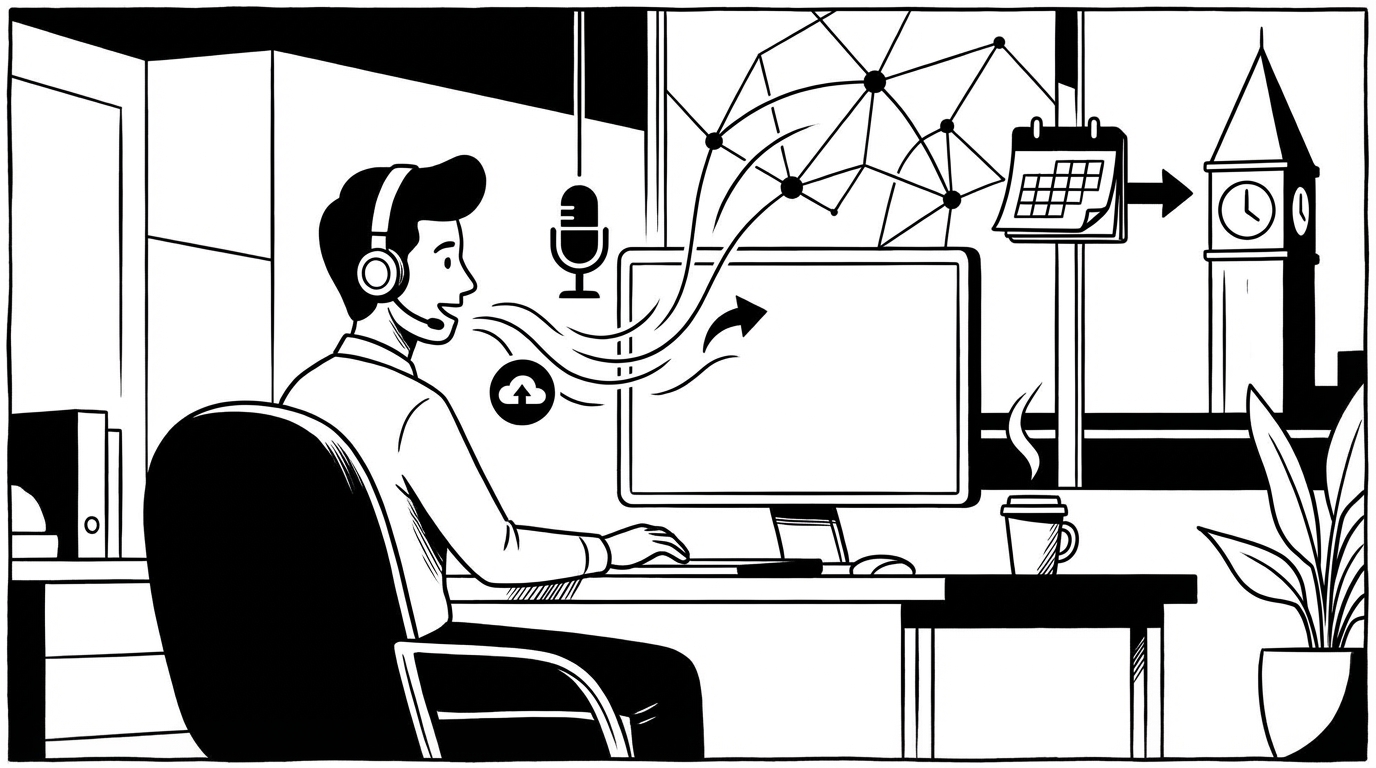
Voice dictation has been "almost there" for twenty years. Dragon Naturally Speaking launched in 1997. Apple added Siri in 2011. Google added voice typing to Android the same year. Every few years, someone declared voice input the future of computing.
It kept not happening. The accuracy wasn't good enough. The workflow friction was too high. The tools didn't work everywhere. The experience was embarrassing enough that most people quietly stopped trying.
Something changed in the last two years. And this time, the adoption curve looks different.
What Actually Changed: The Whisper Moment
In September 2022, OpenAI released Whisper — an open-source speech recognition model trained on 680,000 hours of multilingual audio. It was significantly more accurate than anything publicly available, worked well across accents and languages, handled background noise better, and could be run locally or cheaply in the cloud.
Within months, a generation of voice dictation tools was rebuilt on Whisper or competing models of similar quality. The accuracy problem — the fundamental reason voice dictation had always disappointed — was effectively solved. 95%+ accuracy for clear speech became baseline. Accuracy with accents, technical vocabulary, and natural speech patterns improved dramatically.
For the first time, voice dictation was reliable enough to trust.
The Tools Got Good Enough to Use Every Day
Accuracy alone wouldn't have driven adoption. The workflow had to be right too.
The current generation of voice dictation apps — push-to-talk, system-wide, hotkey-activated — removed the friction that made earlier tools frustrating. You don't open an app. You don't navigate to a dictation mode. You hold a key anywhere on your computer and speak. The result appears immediately where you're working.
This sounds small. The behavioral difference is enormous. A tool you have to consciously decide to use gets used occasionally. A tool that works anywhere with a single keypress gets used constantly.
The Numbers Make the Productivity Case
People speak at roughly 130–150 words per minute. The average knowledge worker types at 40–70 words per minute. That's a 2–3x speed advantage for voice on any task where you know what you want to say.
For the writing tasks that dominate knowledge work — emails, messages, updates, notes, documents — you usually know what you want to say. The friction isn't thinking, it's typing. Voice removes that friction.
At a conservative 2x multiplier, a knowledge worker who writes for three hours a day could produce the same written output in 90 minutes, or produce twice as much in the same time. That's not a marginal productivity improvement. It's structural.
The Adoption Pattern Is Accelerating
Early adopters of the current generation of voice tools are overwhelmingly positive in a way earlier adopters weren't. The complaints that characterized earlier voice tool adoption — "it gets things wrong too often," "it only works in certain apps," "it feels unnatural" — are largely absent from current user feedback.
What you see instead is the language of habit formation: "I can't imagine going back to typing everything," "I use it for everything now," "it changed how I write."
When early adopters talk about a tool in those terms, the adoption S-curve is real. The friction has been removed. The next wave is mainstream users who hear about it from colleagues.
The Remote Work Tailwind
Remote and hybrid work dramatically increased the volume of written communication knowledge workers produce daily. Conversations that used to happen in person now happen in Slack, email, and async tools. The amount of writing required per day went up significantly for most knowledge workers after 2020.
Voice dictation addresses exactly that pain. Higher writing volume makes the speed advantage more valuable. The remote work era effectively increased the ROI of voice input across the board.
The Holdouts and Why They'll Move
The two categories of holdouts are worth addressing:
"I type fast enough." Typing fast is relative. Even a 100 WPM typist is slower than speaking. More importantly, typing speed is only part of the equation — the cognitive load of composing while typing means the real bottleneck is often thinking-and-typing, not just typing. Voice separates speaking from the physical process of text production, which changes the cognitive experience.
"It feels weird to talk to my computer." This one is real but temporary. The transition period — two to three weeks of conscious habit-building — has a clear end point. People who push through it uniformly report that the weirdness dissipates and voice starts to feel natural, then preferred.
The Five-Year Horizon
Voice input won't replace keyboards entirely. Complex code, careful editing, structured documents with precise formatting — keyboards will remain the right tool for many tasks. But for the communication-heavy writing work that fills most knowledge workers' days, voice input is objectively faster, often produces better output, and reduces physical strain.
The technology is ready. The tools are good. The productivity case is clear. The question is no longer whether knowledge workers will adopt voice input. It's how long before it's unremarkable — the same way earphones for phone calls were briefly strange and are now completely normal.
Five years feels about right. Probably less.