Managers: Write Better Performance Reviews and 1-on-1 Notes by Voice
Performance reviews and 1-on-1 documentation are important, time-consuming, and easy to shortchange. Voice dictation makes them faster to write and better to read.
SERP Transcribe Team
Product
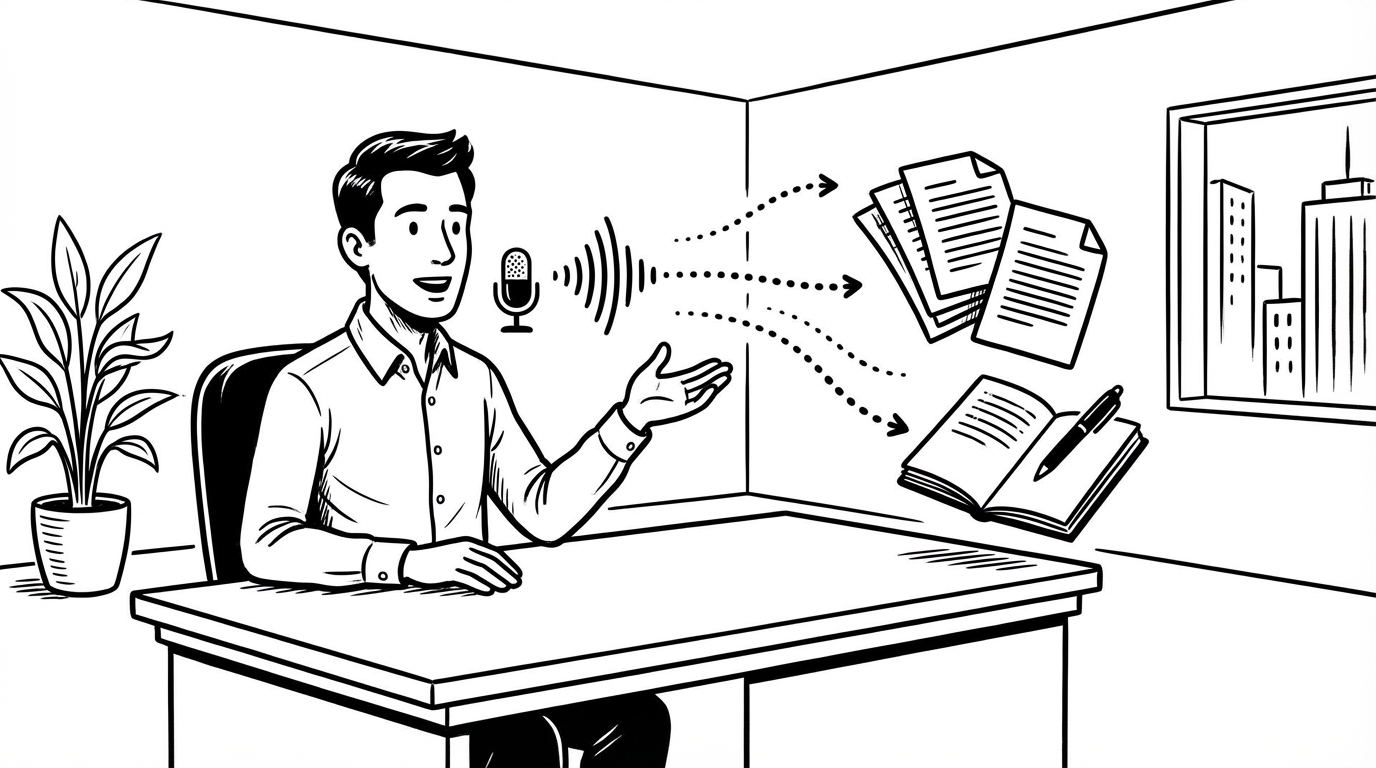
The writing that managers produce about their people — performance reviews, 1-on-1 notes, feedback documentation, promotion cases — is some of the most consequential writing in any organization. It shapes careers, compensation, and professional trajectories. It also gets written under time pressure, often at the end of a review cycle when a manager has twenty other things to do.
The result is usually reviews that are shorter, vaguer, and less useful than they should be. Not because the manager doesn't have the thoughts — they do — but because the typing-under-pressure version of those thoughts produces less than the thinking warranted.
Voice dictation gives you a way to get your actual thinking onto the page, fast.
Performance Reviews
A well-written performance review is specific, balanced, evidence-based, and forward-looking. It names concrete examples, doesn't hide behind vague language, and gives the person a clear picture of where they stand and what they're working toward.
Most managers know this. Most reviews still end up with sentences like "Sarah is a strong contributor who demonstrates excellent teamwork." That sentence says nothing.
The problem is that writing a specific, evidence-rich review takes real effort when you're typing. Finding the right examples, constructing the sentences, making sure the overall message is coherent — it's slow, and the temptation to default to safe, generic language is always there.
Speaking solves this because you're not composing — you're recalling and narrating. You know what Marcus did this quarter. Speak it:
"Marcus had a strong quarter in terms of delivery — he shipped the authentication refactor ahead of schedule and the code quality was genuinely excellent, I heard from two other engineers that they used it as a reference for their own work. Where I want to see growth is in the planning phase. Three times this quarter he started implementation before the design was fully aligned with stakeholders, and we had to rework things partway through. That's costing the team time. The goal for next half is for Marcus to own the alignment process earlier in the cycle, not just the execution."
That review section is specific, honest, constructive, and gives Marcus something to actually work on. It took 35 seconds to speak. Typing the same quality of content would take 5–8 minutes of careful composition.
Capturing 1-on-1 Notes
1-on-1 notes are valuable to a manager in two ways: they create a record of what was discussed and agreed, and they become the raw material for performance reviews. Managers who keep good 1-on-1 notes write better reviews because the examples are already documented.
Most managers either take no notes, or take notes in real time during the meeting which means they're half-listening while typing. Neither is great.
Voice solves this with a simple post-meeting habit: immediately after the 1-on-1, spend 60 seconds speaking your notes while the conversation is still fresh:
"1-on-1 with Priya, Tuesday. She's feeling good about the new project but flagged that she's not sure how to handle the situation with the vendor — their timeline keeps slipping and she doesn't feel empowered to escalate. I told her she absolutely has the standing to escalate and we should get on a call with them this week. She also mentioned she'd like more opportunities to present to the wider team — worth thinking about for the Q2 all-hands. One thing to watch: she mentioned she's been working late most evenings. Worth checking in on workload in two weeks."
Speak it, paste it into your notes app or HR system. That 60-second capture becomes invaluable six months later when you're writing the annual review and trying to remember what happened in January.
Promotion Cases and Calibration Documents
Writing a case for someone's promotion is one of the most high-stakes documents a manager produces. The document needs to be specific, compelling, and evidence-rich — and it usually needs to persuade people who don't know the employee as well as you do.
Voice is useful here for the same reason it's useful for reviews: you know more than you can type quickly. Speaking the case lets you get all your thinking out before you structure it:
"The core case for promoting Jamie to Senior is that she's been operating at that level for six months already. She owns the most complex part of the codebase that we have, she mentors two junior engineers, and she led the migration project end-to-end with almost no oversight from me. She also handles ambiguity better than most people at the Senior level — when requirements shift she recalibrates quickly rather than getting stuck. The one development area is cross-team communication, she can be too heads-down, but she's shown improvement on that in the last quarter."
That's a promotion case in rough form. Structure it, add specifics, and you have a document that can actually move through calibration.
Difficult Feedback Documentation
When a performance conversation is difficult — a PIP, a disciplinary note, a documented warning — the written record matters legally and practically. It needs to be precise, fair, and specific.
Typing these under stress produces either overly cautious, hedged language or blunter-than-intended language. Speaking first, then editing, tends to produce something more calibrated.
Speak the facts as you understand them, what was discussed, what was agreed, and what the next steps are. Then edit the typed version for tone, specificity, and legal appropriateness. The speaking phase gets the substance out; the editing phase makes it right.
The Manager's Compounding Problem
The managers who write the best reviews aren't always the ones with the most talented people. They're often the ones with the best documentation habits — the 1-on-1 notes, the captured examples, the written record that makes strong review writing possible.
Voice dictation makes that documentation habit low-friction enough to actually maintain. A 60-second voice capture after every 1-on-1 compounds into months of solid documentation that makes review season less of a scramble and more of an editing job.
Your people deserve reviews that reflect how much you actually know about their work. Voice makes writing those reviews take less time than the generic ones.