Non-Native English Speakers: Write More Naturally by Speaking First
For people who think in one language and need to write in another, voice dictation bridges the gap — producing more natural English text with less effort than composing in writing.
SERP Transcribe Team
Product
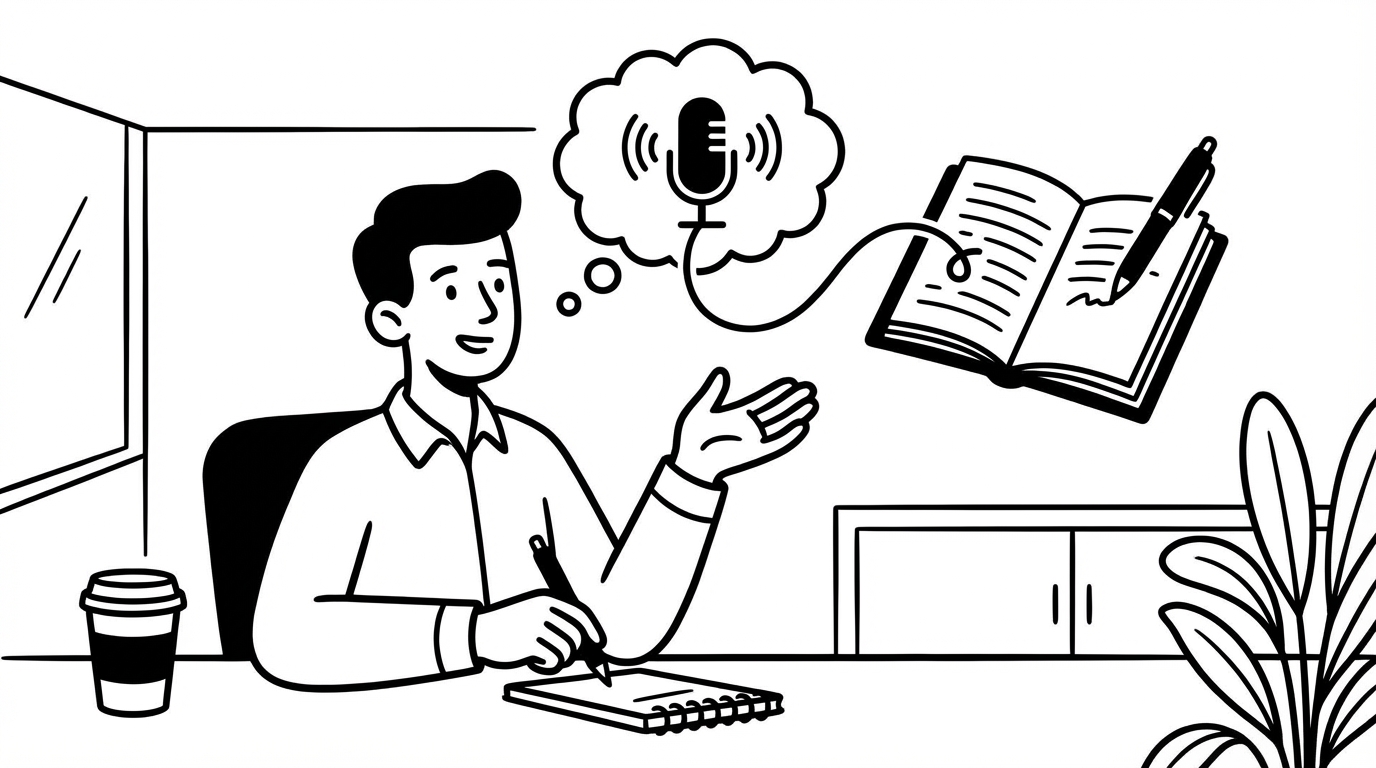
For the hundreds of millions of people who speak English as a second, third, or fourth language, written English presents a specific challenge that voice dictation addresses in a surprisingly effective way.
When you write in a non-native language, you compose in two steps: you think the idea in your first language, then translate it into written English. That translation layer slows you down, makes the prose feel stiff, and costs cognitive energy that could be going into the actual thinking.
Speaking a language you're fluent in, even as a non-native speaker, tends to produce more natural output than writing it. Your spoken English is closer to how you actually communicate than your written English often is. Voice dictation captures that more natural spoken version.
Why Spoken Language Comes Out Better
This is a well-documented phenomenon in language learning and applied linguistics: people who are fluent speakers of a language but less comfortable writers of it produce more natural, idiomatic text when they speak-then-transcribe than when they compose directly in writing.
The reason is that spoken language is produced in real time, without the opportunity to second-guess every word. You speak the sentence the way you'd say it, and it comes out naturally. Written composition allows (and encourages) over-editing — you write a sentence, read it back, decide it sounds non-native, and rewrite it into something even stiffer.
Voice dictation captures your natural spoken fluency and puts it in text form. Then you clean it up. The result is usually more natural than what you'd have produced composing directly.
The Practical Difference
Here's the experience that many non-native English speakers report:
Typed version (often): Overly formal, slightly stilted, either too complex (trying to demonstrate vocabulary) or too simple (avoiding words you're not sure about). Takes a long time. You reread every sentence and worry about whether it sounds right.
Spoken-then-dictated version: Closer to how you actually talk. More direct. Less self-conscious. Faster. The editing pass fixes small errors without changing the voice.
This applies to emails, messages, documents, social media posts — anywhere you write in English professionally or personally.
For Professional Email and Communication
Work email in a second language is one of the most common sources of communication anxiety for non-native speakers. You want to be professional but not stiff, confident but not overreaching, clear but not blunt.
Speaking the email first tends to produce the register you're looking for naturally. You say what you mean the way you'd say it in a meeting or on a call. The transcript gives you that register in text form.
"Hi Tom, just following up on the proposal I sent last Tuesday. I wanted to check if you had a chance to look through it and whether there are any questions I can answer. Happy to set up a call if that would be easier than going back and forth over email. Looking forward to hearing your thoughts."
Spoken naturally in 15 seconds. Professional, clear, not stiff. Exactly the right register.
For Messages and Chat
Quick messages — Slack, WhatsApp, text — are where non-native speakers sometimes feel the most self-conscious, because the informality of messaging makes it harder to know what's appropriate and mistakes feel more visible.
Speaking messages captures the conversational tone that's right for those channels, without the anxiety of composing them carefully. You say it the way you'd say it in a conversation and it comes out naturally informal.
Handling the Editing Pass
After you dictate in English, a quick editing pass matters more for non-native speakers than for native ones. Look for:
- Word choices that sound slightly off — the AI transcription sometimes mishears words, and you'll also catch phrasings that sounded right when you spoke but read oddly
- Grammar that works in speech but not in writing (sentence fragments, missing articles)
- Any places where the intended meaning isn't quite captured
This editing pass is shorter than the composing time it replaces. You're polishing natural-sounding material rather than constructing formal-sounding material from scratch.
For Those Who Think in Another Language
Many multilingual professionals think through complex ideas in their first language and then have to produce them in English. Voice dictation creates an interesting workflow option: think through the idea in your first language, then speak your explanation of it in English. The speaking step is a natural translation — you're explaining, not formally writing.
The explanation that comes out in speech is often cleaner and more natural than what you'd produce sitting at a keyboard trying to compose English directly from your thoughts.
A Practical Encouragement
Your English is probably better than you think it is, particularly your spoken English. Most non-native speakers with professional fluency are harder on their own written output than native speakers are when reading it.
Speaking gives you access to the English you actually have — the fluent, natural version you use in conversations and calls. Dictation captures that version and puts it on the page. That's often better than the carefully constructed but stiff version you produce when composing in writing.
Speak your English. It's good.