Nurses and Healthcare Workers: Capture Patient Notes Faster by Voice
Documentation takes hours away from patient care. Voice dictation helps nurses and clinical staff capture accurate notes faster — at the bedside, between shifts, and everywhere in between.
SERP Transcribe Team
Product
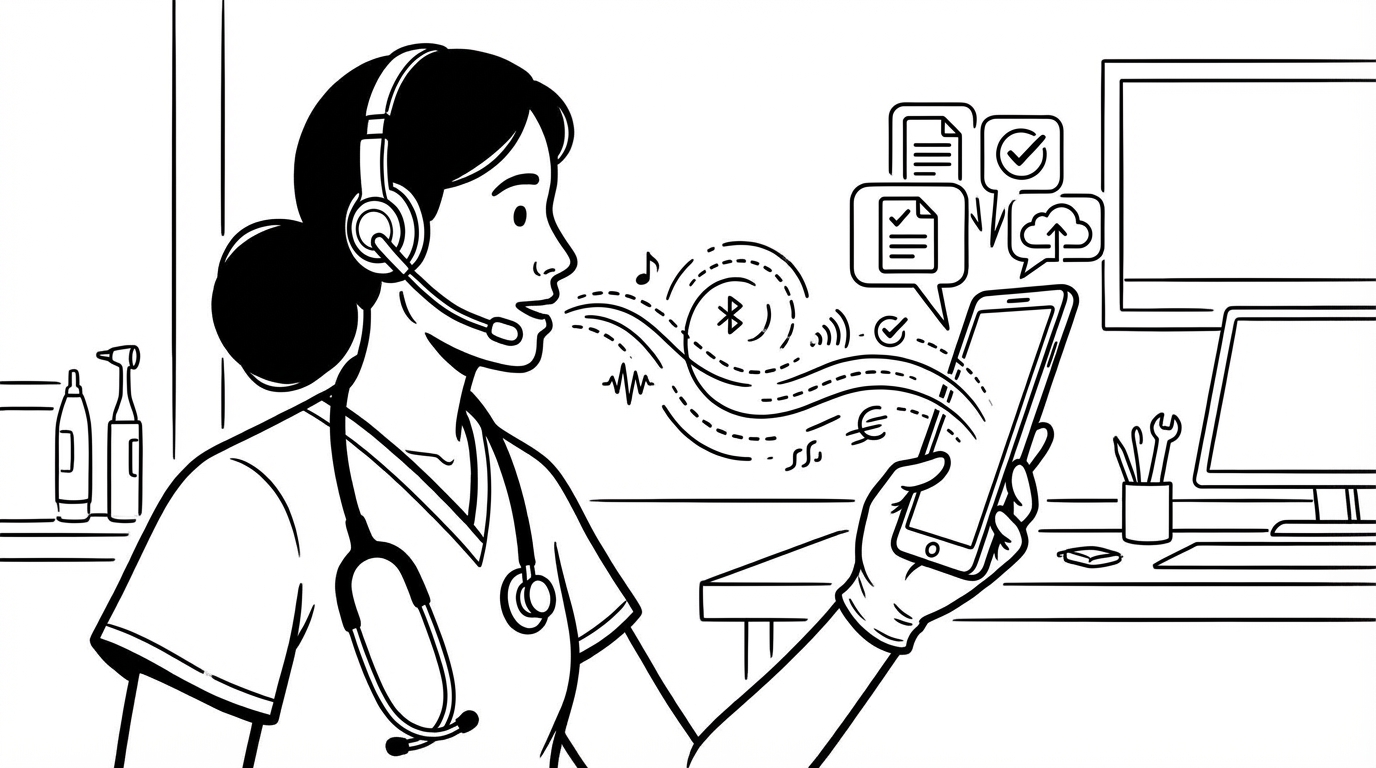
Clinical documentation is one of the most time-consuming parts of nursing and healthcare work — and one of the most consequential. Notes that are inaccurate, incomplete, or written hours after the fact introduce risk. Notes that are detailed, timely, and specific improve care continuity and protect both patients and clinicians.
The challenge is that documentation competes directly with patient time. Every minute spent typing is a minute not spent at the bedside.
Voice dictation doesn't solve the documentation burden entirely. But it makes capturing accurate notes fast enough that clinicians can stay closer to the point of care.
The Documentation Problem in Clinical Settings
Most nurses and clinical staff are familiar with the documentation backlog: you care for patients throughout a shift, mental notes accumulating, and then you document everything at the end — an hour or more of typing from memory after a demanding shift.
The problem with end-of-shift documentation is that memory degrades. Details that seemed obvious at 2pm are hazier at 7pm. The patient who reported their pain as "a 6 but different from yesterday" — you remember the number but maybe not the qualifier. That qualifier might matter.
Voice capture at or near the point of care produces more accurate documentation than end-of-shift recall. The details are fresh, the specifics are there, and the note reflects what actually happened.
How Voice Dictation Fits Into Clinical Workflows
Between patient interactions: After leaving a patient's room, hold the hotkey and speak a quick note while you're still in the corridor: "Room 4, Mrs. Chen, 14:30. Wound dressing changed, site looks clean with no signs of infection. Patient reports pain 4 out of 10, down from 6 this morning. Ambulated to bathroom independently. No new concerns." Paste into your EHR when you're next at a workstation.
Post-assessment notes: After completing an assessment, speak your findings before moving to the next task. A 60-second voice capture immediately after an assessment preserves detail that would take 5 minutes to reconstruct from memory later.
Handoff preparation: Before a shift handoff, speak through your patient summary by voice. Structured, specific, and done in the time it would have taken to type the first patient's section.
Incident notes: When something unexpected happens, capturing the sequence of events by voice immediately after preserves the accurate account that matters for incident reporting.
Accuracy for Clinical Terminology
Modern Whisper-based transcription handles medical terminology significantly better than earlier voice recognition systems. Medication names, anatomical terms, clinical abbreviations — accuracy has improved to the point where clinical use is practical without extensive vocabulary training.
That said, medical documentation should always be reviewed before submission. Voice capture is a drafting tool, not a one-shot solution. Speak the note, review the transcript, correct any errors, submit. The review pass takes 15–30 seconds for a typical patient note.
Privacy and HIPAA Considerations
Patient information is protected health information (PHI) under HIPAA. When using voice dictation for clinical notes, a few practices matter:
- Speak patient notes in locations where you won't be overheard by unauthorized individuals
- Paste notes into your EHR system rather than storing them in general-purpose cloud notes apps
- Use a dictation tool whose privacy practices are consistent with your organization's data handling policies
- Check with your institution's compliance team on approved tools for clinical documentation
SERP Transcribe's push-to-talk model means audio is only captured when you're actively holding the hotkey — there's no ambient recording. Notes should be pasted into your EHR promptly rather than stored in intermediate apps.
The Time Math
A typical nursing shift involves documenting 8–12 patients. If capturing notes at or near the point of care takes 90 seconds per patient versus 6 minutes per patient at end-of-shift (writing from memory), the time savings across a shift is significant — and the quality is higher because the documentation is more timely and specific.
More importantly: those minutes are reclaimed during the shift rather than added at the end. For a profession already working under significant time pressure, that's meaningful.
Documentation That Reflects the Care You Actually Gave
The clinical documentation backlog is a patient safety issue as much as a time management one. Nurses give excellent care that doesn't get fully reflected in notes written hurriedly from memory at the end of a shift. Voice capture at the point of care produces documentation that actually reflects the assessment, the conversation, the clinical judgment that happened.
That's better for patients, better for care continuity, and better for the clinicians who gave the care.