Personal Trainers: Write Client Programs and Session Notes by Voice
Programming, session logs, check-in messages, and progress notes — personal trainers write more than most people expect. Voice dictation handles the admin so you can focus on coaching.
SERP Transcribe Team
Product
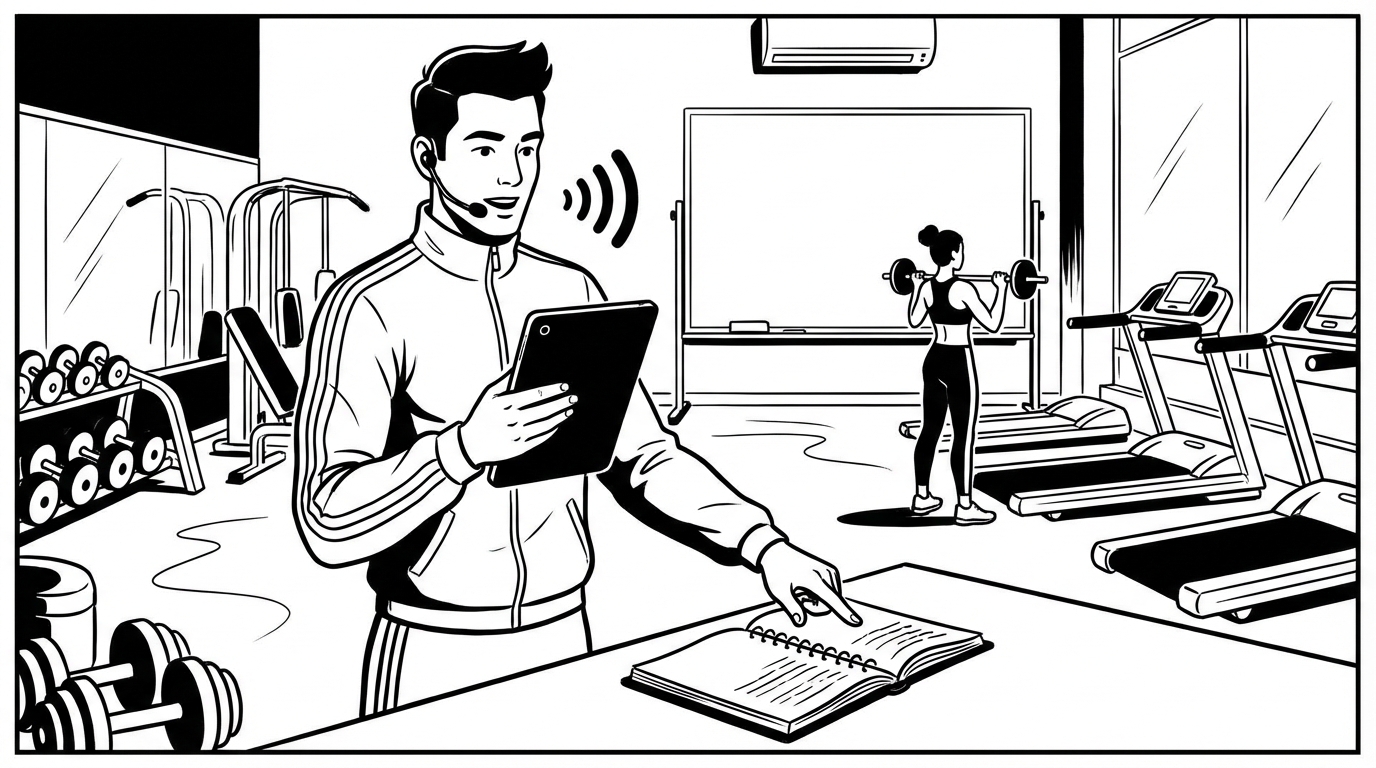
Personal training has an admin problem that nobody warns you about when you start: between program design, session notes, check-in messages, progress tracking, and client communication, you're spending hours a week writing. Hours that could be coaching time, continuing education, or rest.
Voice dictation cuts the writing time significantly — especially for the notes and communications that are better spoken than composed.
Session Notes
Session notes captured immediately after a training session are more accurate and more useful than notes written later in the day. You remember the specific weights, the technique cues that worked, the client's energy and feedback, the things to adjust next session.
Walk out of the gym or step away from the session and hold your hotkey:
"Session with Marcus, Thursday. Squats up to 185 for 3x5, looked solid — hip drive is improving. The cue 'spread the floor' is clicking for him. Bench: 155 for 3x8, right shoulder was bugging him a little on the last set. Going to watch that next week, might back off the weight slightly. Pull-ups: 4x6 with bodyweight, great improvement from last month. Energy was good today, he mentioned he's sleeping better. Next session: keep the squat progression, monitor the bench shoulder issue, add some face pulls for shoulder health."
That note — specific, clinical, actionable — took 30 seconds to speak and is worth its weight when you're reviewing before the next session.
Program Design Notes
When designing a training block, speaking your programming rationale helps you think through it and documents your reasoning at the same time:
"Eight-week hypertrophy block for Sarah. Starting with an accumulation phase — higher volume, moderate intensity. Main movements: squat, hip hinge, horizontal push, horizontal pull, vertical pull. Keeping intensity at RPE 7-8 for the first three weeks to build work capacity before we increase load. Her weak point is posterior chain so I'm prioritizing RDLs and hip thrusts over conventional deadlifts for now. Reassess at week four."
Spoken in 30 seconds, pasted into her program notes. The reasoning is documented, the intent is clear, and when you revisit it in week six you know why you made the choices you made.
Client Check-In Messages
The weekly or bi-weekly check-in message — asking about sleep, nutrition, energy, soreness, life stress — is a relationship touchpoint that keeps clients engaged and gives you the data to program intelligently. Voice makes these fast enough to actually send consistently:
"Hey Marcus, checking in ahead of Thursday's session. How's the week been — sleep, energy, anything soreness-wise from Monday? Also wanted to see how the nutrition tracking is going, we talked about hitting your protein target more consistently. Let me know and I'll see you Thursday."
Warm, specific, personal. 15 seconds to speak. The client feels attended to. You have useful information before the session.
Progress Updates and Client Reports
Monthly or quarterly progress summaries for clients are a retention tool as much as a coaching tool — they remind clients how far they've come and reinforce the value of the relationship. Voice makes these practical to actually write:
"Marcus — three-month update. When you started in November, you were squatting 135 for 3x5 and feeling shaky above that weight. You're now at 185 for solid sets with good technique. Pull-ups have gone from 2 strict reps to 6 per set. Body weight is down 8 lbs. More importantly, you mentioned your back pain is essentially gone and you're sleeping better. That's the work. Really solid progress — looking forward to the next block."
That message, sent at the three-month mark, is the kind of communication that makes clients stay and refer others. It takes 35 seconds to speak.
Nutrition and Lifestyle Guidance Notes
When you give a client detailed guidance on nutrition, sleep, recovery, or lifestyle, capturing that guidance in a note — for them and for your records — is good practice. Speak it immediately after the conversation: "Talked to Sarah about protein timing post-workout — aim for 25-30g within 90 minutes, her preference is a shake. Also discussed sleep hygiene — she's going to try no screens 30 minutes before bed. Follow up in two weeks to see if it's making a difference."
The Coaching Business Math
For trainers who run their own business, time spent on admin is time not spent coaching or recovering. Voice dictation compresses the admin — session notes, check-ins, program documentation — enough to meaningfully shift that balance.
Better documentation also means better coaching: when your session notes are specific and complete, your programming decisions are better informed. You remember the shoulder issue. You notice the plateaus. You catch the things that matter.