Plan Trips, Build Packing Lists, and Journal Travel — All by Voice
From the planning stage to the airport to the hotel room at the end of a long day, voice dictation makes every part of travel writing faster and more enjoyable.
SERP Transcribe Team
Product
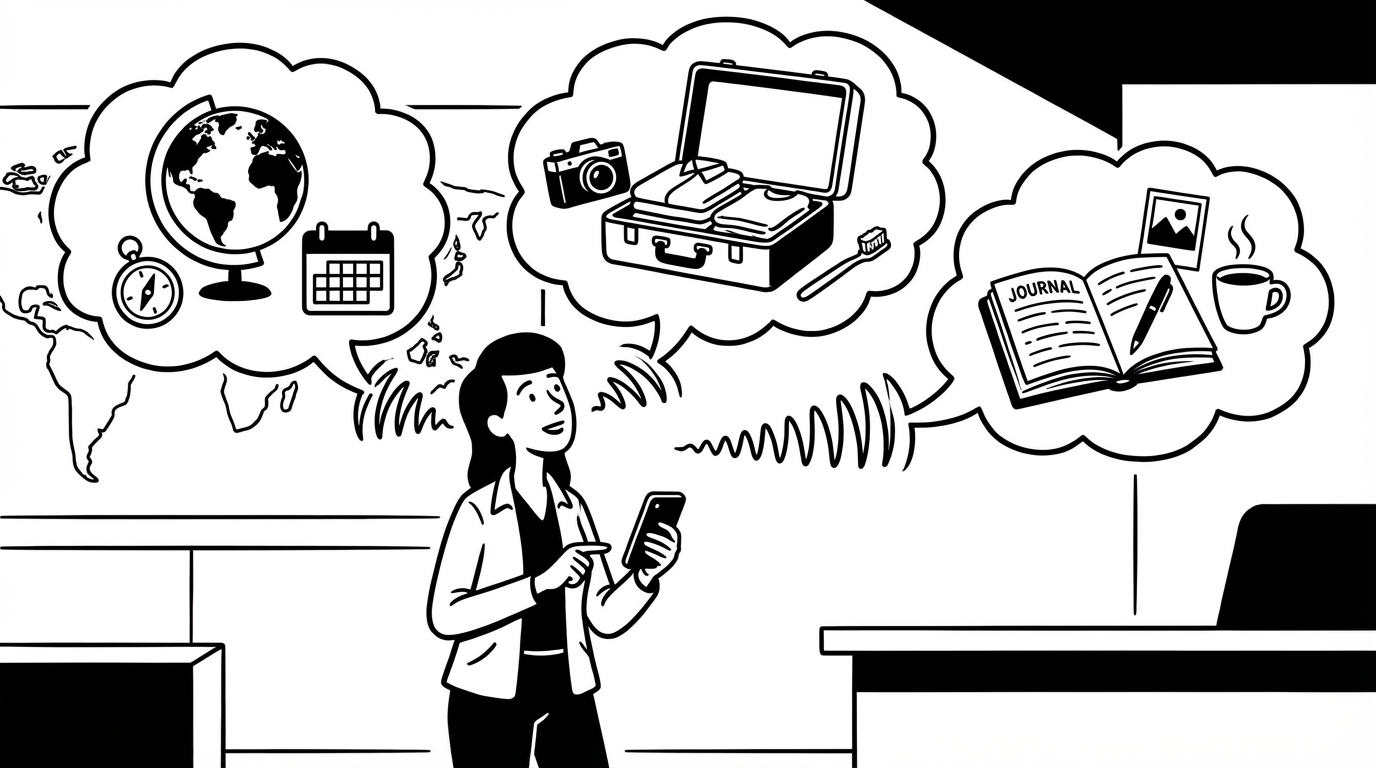
Travel involves a surprising amount of writing — before you leave, while you're there, and after you're back. Planning docs, packing lists, restaurant notes, day recaps, itinerary adjustments, things you want to remember. Most of it happens under time pressure or physical inconvenience, which is exactly when typing is least appealing.
Voice handles all of it. Here's how.
Trip Planning
The planning stage of a trip involves a lot of information gathering and organizing: places you want to see, restaurants to try, logistics to figure out, notes from research. Most people either keep this in a messy browser tab pile or spend hours typing it all out properly.
Voice lets you build your trip planning doc by talking through what you know, as you research:
"Okay for the Lisbon trip — first priority is the Alfama neighbourhood, want to spend at least half a day there. There's a fado show on Thursday and Friday nights at a place called Clube de Fado that has good reviews, need to book in advance. For food: Time Out Market is the easy option but might be too touristy, there's a place called Taberna da Rua das Flores that looks more authentic. For the day trip, Sintra or Setúbal — Setúbal is less crowded but further. Need to look into train times."
Speak as you research. Paste into your planning doc. The document builds itself alongside your research rather than being a separate task you have to do afterward.
Packing Lists
Packing lists are a perfect voice use case because they tend to be built up over several days before a trip — you think of something you need while doing something else, or remember an item while getting dressed. Capturing each addition immediately by voice means your list is complete by the time you pack.
The workflow: keep your packing list open on your laptop. Any time you think of something to add, hold the hotkey and speak it: "Add to packing list: universal adapter, the lightweight rain jacket, sunscreen SPF 50, printed hotel confirmations."
By packing day, the list has been building for a week and it's complete without a single dedicated "write the packing list" session.
On the Road: Notes While You Explore
One of the best uses of voice while traveling is capturing observations and moments in real time, before they fade. Memories from travel blur together faster than you'd expect — two weeks after a trip, the details of your best day are already fuzzy.
While you're still at the place, or sitting on a bus between stops, hold the hotkey and speak what you want to remember:
"The market in Marrakech — the spice area smells incredible, layers of cumin and something floral I couldn't identify. Got completely turned around twice in the medina which was half terrifying half wonderful. The mint tea at the little place on the corner was the best thing I've had all trip — just a tiny glass, incredibly sweet. Wish I'd gotten the name of the street."
That's a paragraph of real travel memory, captured in real time. Paste it into your notes app and it's there forever.
End of Day Recaps
Keeping a travel journal is one of those things most people intend to do and few people actually maintain past the second day. Writing longhand at the end of a long day of travel feels like homework when you're exhausted and your feet hurt.
Voice changes the economics. An end-of-day travel journal entry by voice takes three minutes:
"Day three in Kyoto. Did the Fushimi Inari hike this morning — went all the way to the top, took about two hours. The crowds thin out dramatically above the halfway point and it's completely quiet up there. Afternoon was the Arashiyama bamboo grove, which is genuinely impressive for about five minutes and then you've seen it. Had ramen for dinner at a place near the hostel, ordered by vending machine, sat at the counter. Tired but the good kind."
Speak it while you're lying in bed, paste it into your travel journal. Three minutes, and you've preserved the day. In twenty years, that entry will be worth more than any photo from the trip.
Restaurant and Experience Notes
If you care about food or experiences enough to remember and recommend them later, voice lets you capture notes immediately after — while you're still outside the restaurant, while the impression is fresh:
"Dinner at Nomad, New York. Had the roast chicken, it absolutely lives up to the reputation. The dining room is beautiful. Service was excellent without being fussy. Expensive but not unreasonably so for what it is. Would go back, would recommend for a special occasion."
Paste into your food notes or a notes app. You've just written a review that's actually useful — to yourself next time and to friends who ask for recommendations.
Post-Trip: Writing It Up
After a trip, a lot of people want to write something — a trip report, a blog post, recommendations for friends. Voice makes the first draft of this easy: speak through the trip as if you're telling a friend about it. What were the highlights, what didn't work, what would you do differently, what would you tell someone planning the same trip.
Speak the whole thing, paste it, edit it into whatever format you want. The first draft is the hard part. Speaking makes it happen.