The Case for Speaking Every First Draft
What if you stopped typing first drafts entirely? Writers, professionals, and students who've made the switch report the same thing: spoken drafts are faster, less painful, and often better.
SERP Transcribe Team
Product
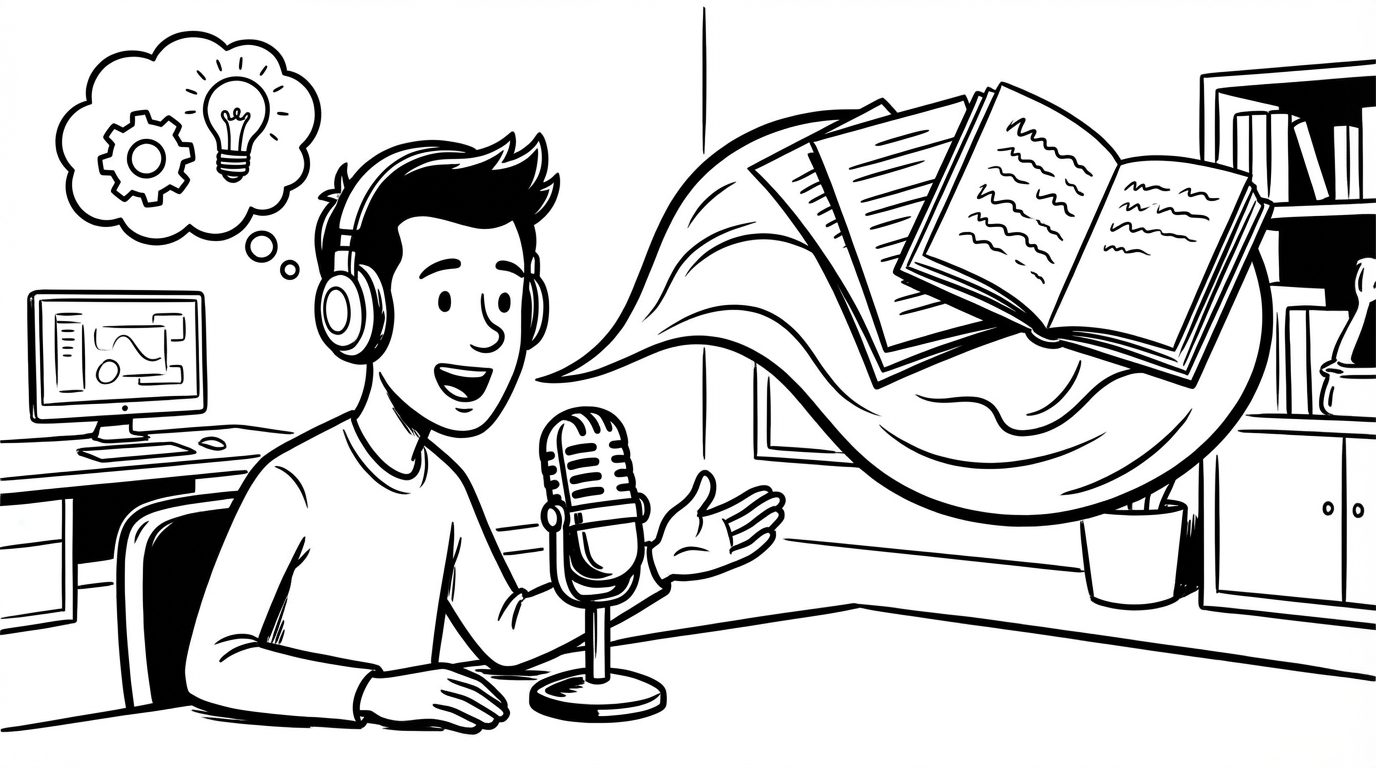
The hardest part of any writing task is the first draft. The blank page. The first sentence. The commitment to a direction before you're sure it's the right one.
Voice dictation doesn't solve all of this. But it changes the first-draft experience enough that many writers, once they've tried speaking their drafts, stop typing them entirely.
Here's the case for making that switch.
Why First Drafts Are Hard When You're Typing
Typing a first draft creates a specific kind of paralysis: you compose the sentence in your head, type it, and immediately evaluate it. Is it good enough? Is it the right direction? Does it sound right? The cursor blinks. You rewrite the sentence. You move on, unsatisfied. The blank page advances slowly and painfully.
The problem isn't that you don't have ideas. It's that typing invites premature editing. You can't unsee the sentence on the screen, and you can't stop yourself from judging it while you're still trying to produce it.
Why Speaking a Draft Is Different
When you speak, you can't go back. You produce a sentence, and it's done — the next sentence has to follow it. The speaking process forces forward movement in a way typing doesn't.
This turns out to produce better first drafts, not worse ones. The forward momentum means you finish thoughts instead of abandoning them halfway through. The inability to endlessly refine means you move through the material instead of getting stuck on paragraph two. The spoken draft is rougher, but it's complete — and a complete rough draft is infinitely more useful than a perfect unfinished fragment.
The Edit Later Liberation
The most liberating thing about speaking first drafts is internalizing a single principle: the first draft's job is to exist, not to be good.
Spoken drafts fail at being good and succeed spectacularly at existing. They're conversational where they should be formal, redundant where they should be tight, structurally loose where they should be organized. That's fine. Every one of those problems is fixable in editing. The thing that isn't fixable is not having any draft to edit.
When you internalize "speak now, fix later," the first-draft anxiety mostly disappears. You're not trying to be good. You're trying to get something on the page. Speaking is the fastest path to something on the page.
What Types of Writing This Works Best For
Emails and messages. The highest-value application because it's the most frequent. Speak the email the way you'd say it to the person, paste, do a 15-second scan, send. The email that would have taken 8 minutes of careful composition takes 90 seconds.
Blog posts and articles. Speak through your main points as if explaining them to someone. The transcript of that explanation is your first draft. Structure it, tighten it, polish the language — but the ideas and the arc came from speaking.
Reports and documents. Speak section by section. Each section is one extended burst: what's the point, what's the evidence, what's the implication. Paste, then organize and refine.
Difficult messages. When you need to say something hard — constructive feedback, a sensitive request, a complex negotiation — speaking first often produces a better version than typing carefully. Your spoken attempt at explaining something hard is usually more human and more clear than your carefully composed typed version.
Fiction and creative writing. Speaking scenes and chapters works particularly well for writers who struggle with the blank page. The spoken draft has the energy of improvisation that typed prose often lacks, and that energy can survive the editing process if you're careful to preserve it.
What It Doesn't Work For
First-draft speaking is less useful for things that require precise structure before you start: formal legal documents, structured reports with specific format requirements, anything where getting the format right in the first pass matters more than getting the content down.
For most writing, though, content comes before format. Speak the content. Format it after.
Getting Started With Spoken First Drafts
The first time you try this, speak without worrying about how it sounds. Don't plan, don't outline — just start talking about what you're trying to communicate. Speak until you've covered the main things you want to say.
Then read back what you have. It'll be rougher than what you'd have typed. It'll also usually cover more ground, in a more natural voice, with less of the stiffness that typed-from-scratch prose often has.
Shape it, tighten it, fix the obvious problems. You'll find you spend less time on this edit than you usually spend on the composing phase.
After a few weeks of spoken first drafts, the idea of typing from scratch will start to feel unnecessarily hard.