The Two-Second Rule: Capture Everything Before It Disappears
Ideas, to-dos, and insights have a half-life of about two seconds before they start fading. Here's a simple rule for capturing them — and why voice is the only method fast enough.
SERP Transcribe Team
Product
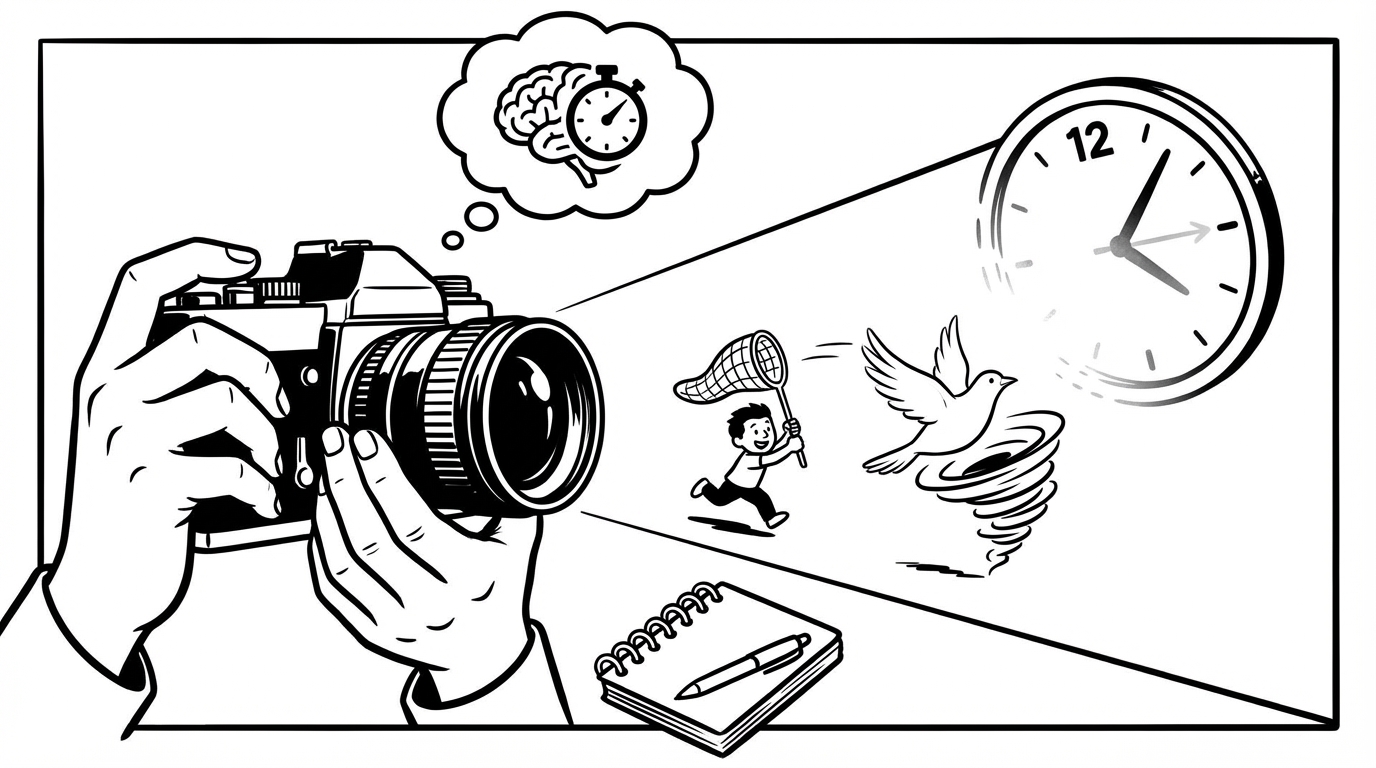
You've had the experience. A good idea arrives — fully formed, clear, the kind you know is worth keeping — and you tell yourself you'll write it down in a moment. Then something interrupts you, or you simply move on, and twenty minutes later you can feel that there was something you wanted to remember but can't quite reach it.
The idea is gone. Not because your memory is bad. Because ideas have a half-life, and that half-life is short.
Why Ideas Disappear
Working memory is the mental scratch pad where ideas live before they get written down or encoded into long-term memory. It's limited in capacity — most people can hold about four chunks of information — and it's volatile. Any interruption, any shift in attention, any competing thought can push an idea out before it gets captured.
The problem isn't intelligence or effort. It's the physics of cognition. Ideas that aren't immediately captured are lost to the same process that makes you forget why you walked into a room.
The Two-Second Rule
The rule is simple: if a thought is worth keeping, you have approximately two seconds to start the capture process before the chance of losing it climbs sharply. Not two seconds to finish capturing it — two seconds to start.
This is why so many capture methods fail in practice. Opening your phone, finding the right app, tapping into a text field — that's already five to ten seconds at best. The activation energy exceeds the window.
Voice dictation is the only capture method that reliably fits the two-second window:
- Hold hotkey: 0 seconds (your hand moves to the key)
- Start speaking: 1 second
- Idea is being captured: 2 seconds
That's it. The idea is safe before your working memory has had a chance to let it go.
What's Worth Capturing
Not every passing thought needs to be preserved. But certain categories have proven high-value enough to be worth capturing immediately:
Ideas. The solution to a problem you've been stuck on. A new angle on a project. A product idea. These often arrive when you're not actively working — in the shower, on a walk, driving. Capture them the moment they surface.
To-dos. Things that need to happen that occur to you while you're doing something else. "I need to email the accountant." "We're out of coffee filters." "Follow up with the client about the contract." These feel obvious when they surface but are gone within minutes if not captured.
Insights. Realizations about your own work, behavior, or thinking that surface during reflection. These are the most valuable and most fleeting. A therapy insight. A pattern you've noticed in how you work. A belief you've changed.
Draft thoughts. The sentence for the email you've been trying to write. The opening line for the blog post. The way to phrase something difficult that finally clicked. Capture it before you sit down to "write" and you'll find the writing already done.
Building the Habit
The capture habit is the critical piece. Having a tool available is table stakes. What matters is the instinct to use it in the moment — the reflex that fires when a thought occurs: capture that.
Building that reflex takes about two weeks of consistent use. The first week feels effortful — you have to consciously remind yourself. By the second week, reaching for the hotkey when a thought arrives starts to happen automatically. By week three, you'll wonder how you went so long losing ideas.
What You'll Notice
People who build a consistent capture habit report a few things changing:
They stop saying "I had a great idea but I can't remember what it was." The ideas are there when they need them.
They stop the low-level anxiety of trying to hold multiple mental to-dos in working memory. The list is somewhere external, not bouncing around in the background.
Their best ideas don't come from sitting down to brainstorm — they come from capturing what was already there, just previously lost before it could be used.
The Tool Is Only As Good As the Habit
Voice dictation makes the capture window achievable. But the window only matters if you use it. The habit is: when a thought arrives that's worth keeping, your hand moves to the hotkey and you speak before you do anything else.
Two seconds. Every time. Nothing is too small to capture quickly, and nothing important should wait.