Typing Is a 150-Year-Old Bottleneck Nobody Questions
The QWERTY keyboard was designed for mechanical typewriters in the 1870s. Why are we still using it as our primary interface for getting thoughts out of our heads?
SERP Transcribe Team
Product
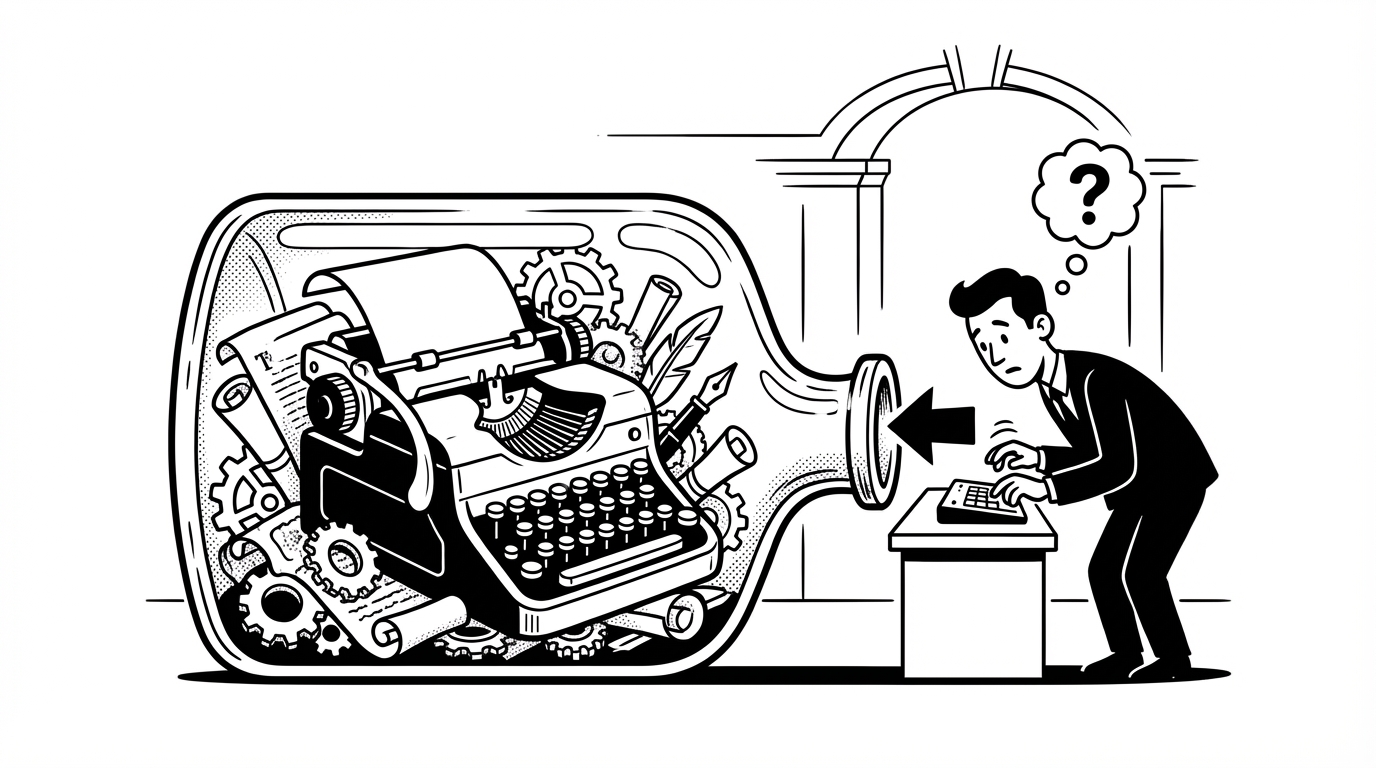
The QWERTY keyboard layout was patented in 1874. It was designed to solve a specific mechanical problem with early typewriters — keys on adjacent rows jammed when typed in quick succession, so commonly paired letters were spread apart to slow typists down and reduce jams.
The mechanical typewriter is extinct. The jamming problem it created no longer exists. The layout designed to solve it is still on your laptop right now.
This is the keyboard. Not just the QWERTY layout — the entire concept of translating thought into physical key presses, one character at a time, as the primary way humans communicate through computers.
It's a 150-year-old bottleneck. And almost nobody questions it.
The Speed Gap
The average person speaks at 120–180 words per minute. The average person types at 40–60 words per minute. Even skilled typists — people who've invested years developing a relatively rare skill — typically top out at 80–100 words per minute in sustained use.
Speaking is two to three times faster than typing for most people. And unlike typing, speaking is a skill you've been developing your entire life without any special training. You don't need to learn to speak faster. You already know how.
When we sit down at a computer to write, we take a thought that exists fully formed in our minds and laboriously convert it to a sequence of finger movements, one key at a time. The conversion process loses things — thoughts that trail off before they're captured, sentences abandoned mid-construction, ideas that exist in memory but never reach the page because the transcription overhead is too high.
Why We Didn't Switch Sooner
Voice recognition has existed for decades, but early implementations were genuinely inadequate — slow, inaccurate, requiring you to speak in an unnatural stilted cadence that felt more like operating a machine than communicating. The friction of correcting errors exceeded the friction of typing. Most people tried it and gave up.
This left the keyboard unchallenged not because it was actually better, but because the alternative was worse.
That calculation changed around 2022 when OpenAI released Whisper, a speech recognition model trained on 680,000 hours of diverse audio. The accuracy improvement was dramatic — not 90%, but 95%+, accurate enough that for most dictation, errors are rarer than typos. The new generation of dictation tools built on Whisper are qualitatively different from what came before.
The bottleneck is finally being challenged. Not replaced overnight — keyboards remain better for some inputs — but genuinely challenged for the use case where it matters most: producing language.
What We Give Up to Type
The cognitive overhead of typing is real and underappreciated. Translating thought into finger movements requires a portion of your working memory and attention. When you're typing intensely, part of your mental capacity is consumed by the physical act of typing rather than the thinking you're trying to do.
This is why many writers describe their best sessions as ones where "the words just flowed" — the transcription overhead dropped low enough that they were thinking and writing simultaneously. Voice dictation can produce this state more reliably because speaking has a lower cognitive overhead than typing for most people. You're doing what you've always done — expressing thought verbally — and the text appears as a byproduct.
The Transition Happening Now
We're at an early but real inflection point. Push-to-talk dictation tools have built significant user bases. Developers dictate commit messages and code comments. Writers dictate first drafts. Executives dictate emails. Parents dictate grocery lists. The use case library is expanding.
The keyboard isn't going away — it's better than voice for many inputs: precise characters, code syntax, passwords, short commands, situations where you can't make noise. The future is probably hybrid: voice for language production, keyboard for precision inputs.
But for the core use case of getting thoughts out of your head and into text — the thing we've been using the keyboard for — speaking is faster, more natural, and lower effort. The bottleneck was never necessary. We just didn't have a good alternative until recently.
The 1874 solution to an 1874 problem deserves to be questioned.