Virtual Assistants: Manage Multiple Clients' Communications Faster by Voice
VAs write hundreds of messages a week across multiple clients. Voice dictation is the single most effective way to increase output without increasing hours.
SERP Transcribe Team
Product
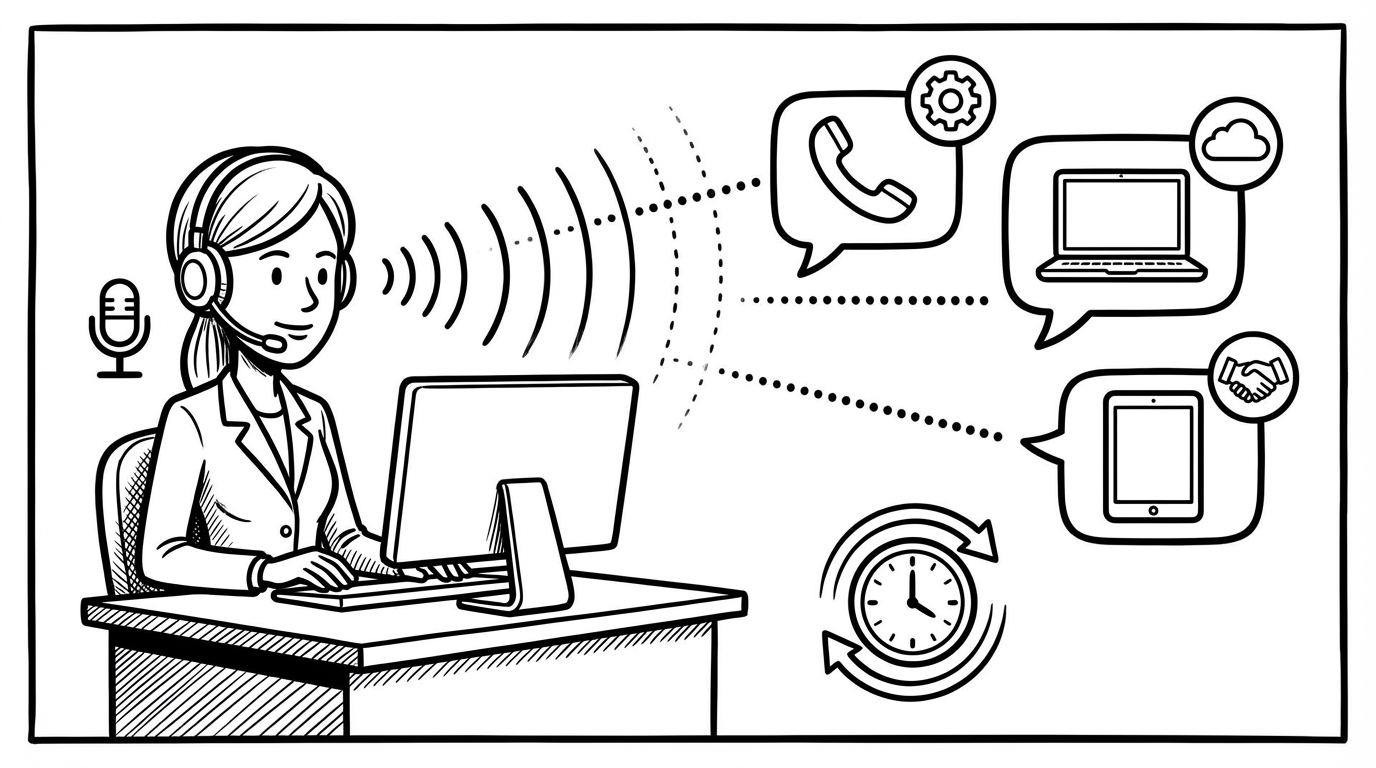
Virtual assistants are professional writers in a way most people don't appreciate. A VA managing three clients might write 200+ messages, emails, and updates in a single day — each one needing to match a different client's voice, context, and communication style. The volume is relentless and the context-switching is constant.
Voice dictation is one of the highest-leverage tools available to VAs for exactly this reason: it dramatically reduces the time per message while actually improving the quality of communication.
The VA's Writing Problem
Typing is a bottleneck for VAs in a way it isn't for most other roles. When your entire output is written communication — emails, messages, social replies, calendar confirmations, vendor coordination, client updates — the speed at which you produce that communication directly limits how many clients you can serve and how well.
A VA who types at 70 WPM and dictates at 160 WPM can serve more clients, respond faster, and have more mental energy left at the end of the day. The math is straightforward.
Switching Between Client Voices
One of the more subtle challenges in VA work is voice-matching: writing in your client's voice, not yours. The CEO whose emails are terse and direct needs different communication than the wellness coach whose messages are warm and conversational.
Voice dictation actually helps with voice-matching because you can consciously shift your speaking register before holding the hotkey. Speaking in someone else's tone comes naturally once you've internalized it — the same way an actor shifts character. You hold the key, think "terse and direct," and speak. The output captures that register naturally.
Typing, by contrast, defaults to your own writing voice unless you consciously fight it.
High-Volume Communication Workflows
Email triage and responses: Go through your client's inbox, read each message, hold the hotkey and speak the reply. For a client with a busy inbox, clearing 20 emails by voice takes 30 minutes instead of 90.
Social media management: Dictating responses to comments and DMs across multiple clients' accounts is significantly faster than typing each one. Speak the response, paste, post.
Scheduling and coordination: Confirmation emails, reschedule requests, vendor replies — all short, all repetitive in structure, all faster by voice. "Hi James, confirming the call on Thursday at 2pm EST. I've added the Zoom link below. Looking forward to it."
Status updates to clients: Weekly or daily updates keeping clients informed are perfect dictation candidates — structured, conversational, and familiar enough in format that you can speak them fluently.
Managing the Context Switch
Switching between clients mid-session is a real cognitive load. Voice helps with this too: before switching to a new client, hold the hotkey and speak a brief context note to yourself: "Switching to Sarah Chen — she's the marketing consultant, we're managing her LinkedIn and her executive inbox. This week she has the speaking engagement on Thursday, needs follow-up on the Forbes pitch."
Spoken context note, pasted into a scratch doc. Your brain reloads the client faster. The next message you write for her is already in her context before you type the first word.
Protecting Client Confidentiality
VAs handle sensitive client information. SERP Transcribe's push-to-talk model means nothing is recorded when you're not actively holding the hotkey, which is an important privacy consideration when you're working in a home office or shared space where others might be present.
Paste dictated content directly into the relevant client tool (email client, social scheduler, CRM) rather than storing it in intermediate personal notes to keep client data properly compartmentalized.
The Capacity Equation
Most VAs price by the hour or by the package. If voice dictation lets you do the same work in half the time, you have three options: serve more clients, deliver more value to existing clients in the same hours, or work fewer hours for the same income.
All three are good problems to have. The tool that creates that option is worth knowing about.