Voice Dictation vs AI Writing Assistants: They're Not the Same Thing
ChatGPT writes for you. Voice dictation helps you write faster. These are different tools solving different problems — and knowing which to reach for changes how productive you are.
SERP Transcribe Team
Product
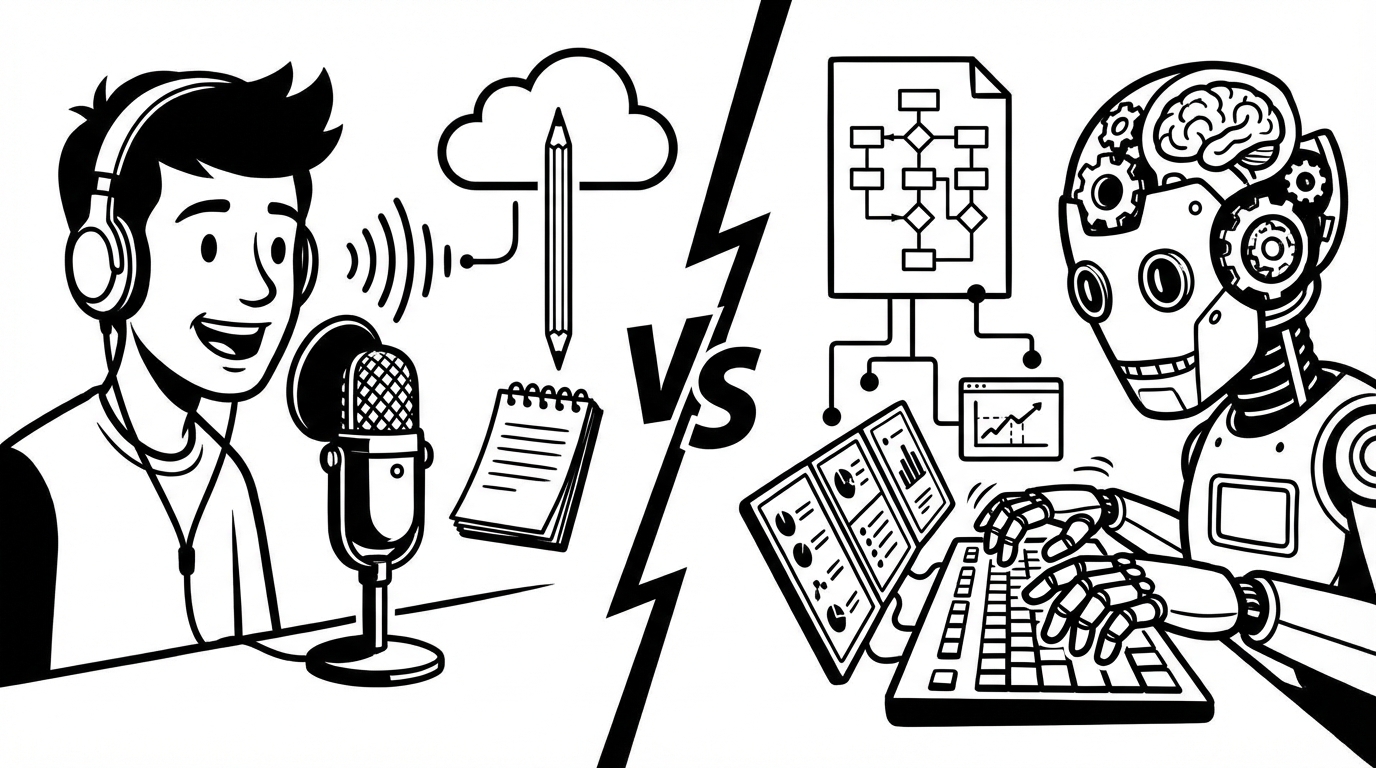
A question that comes up a lot now: "If I can just ask ChatGPT to write my email, why would I use voice dictation?"
It's a fair question. The answer reveals something important about what these two tools actually do and when each one is the right choice.
What AI Writing Assistants Do
ChatGPT, Claude, Gemini, and similar tools generate text from your prompts. You describe what you want written, and they produce a draft. For certain tasks — writing something in a style you don't have, generating content from a brief, drafting something in a format you're unfamiliar with — AI writing assistants are genuinely powerful.
The output is AI-generated prose. It sounds like AI-generated prose, because it is.
What Voice Dictation Does
Voice dictation converts your spoken words to text. You speak in your own voice, with your own ideas, and the words appear exactly as you said them (with natural transcription cleanup). The output sounds like you, because it is you — just typed by a machine rather than your fingers.
The Fundamental Difference
AI writing assistants produce someone else's (something else's) words shaped by your instructions. Voice dictation produces your words, faster.
That distinction matters enormously depending on what you're writing.
Where AI wins: Generating a first draft from a brief, writing content in a style or format you're not comfortable with, producing boilerplate you'd otherwise copy-paste, writing things where the specific voice doesn't matter.
Where voice dictation wins: Any communication where the words need to sound like you. Personal emails. Messages to friends, family, colleagues. Cover letters. LinkedIn posts. Client communications. Anything where "authenticity" and "your actual voice" are part of what makes it work.
The Authenticity Problem With AI-Written Communication
There's a growing awareness that AI-generated communication feels off in personal contexts. Colleagues can tell when an email doesn't sound like the person who sent it. Clients notice when outreach feels templated. Readers recognize AI-written LinkedIn posts.
Voice dictation produces text that sounds exactly like you because you spoke it. It has your rhythm, your vocabulary, your way of framing things. It's genuinely your words, produced faster than typing.
Using Both Together
The most effective workflow for many knowledge workers uses both tools:
- Voice dictation for personal communication, real-time writing, capturing ideas, and anything where your voice matters
- AI assistants for generating options, improving drafts you've already written, producing structured content from information you provide, and tasks where generated prose is appropriate
A practical example: dictate your thoughts about a topic by voice, then paste the transcript into ChatGPT and ask it to help you structure or improve it. You bring the ideas and the voice. The AI helps with the polish. The final output is unambiguously yours.
The Speed Dimension
For short-form writing — the emails, messages, notes, and updates that make up most of a knowledge worker's day — voice dictation is often faster than going to an AI assistant. Opening ChatGPT, writing a prompt, waiting for a response, editing the output to sound like you... for a routine email reply, that's 3–5 minutes. Dictating the reply directly takes 30 seconds.
AI assistants earn their keep on complex tasks. For everyday communication, voice dictation is more efficient.
The Bottom Line
Think of it this way: voice dictation is a faster input method. AI writing assistants are a content generation method. Both are useful. Neither replaces the other.
If you're deciding between them for everyday work communication, voice dictation almost always wins on speed, authenticity, and output quality. If you're generating content at scale or need help with structure and polish, AI assistants are the right tool.
The best-equipped knowledge workers in 2026 use both — and know which one to reach for.