Why Your Voice Sounds More Human Than Your Writing
Most people write stiffer, more formal, and less interesting than they talk. Understanding why — and fixing it — changes how you communicate at work and online.
SERP Transcribe Team
Product
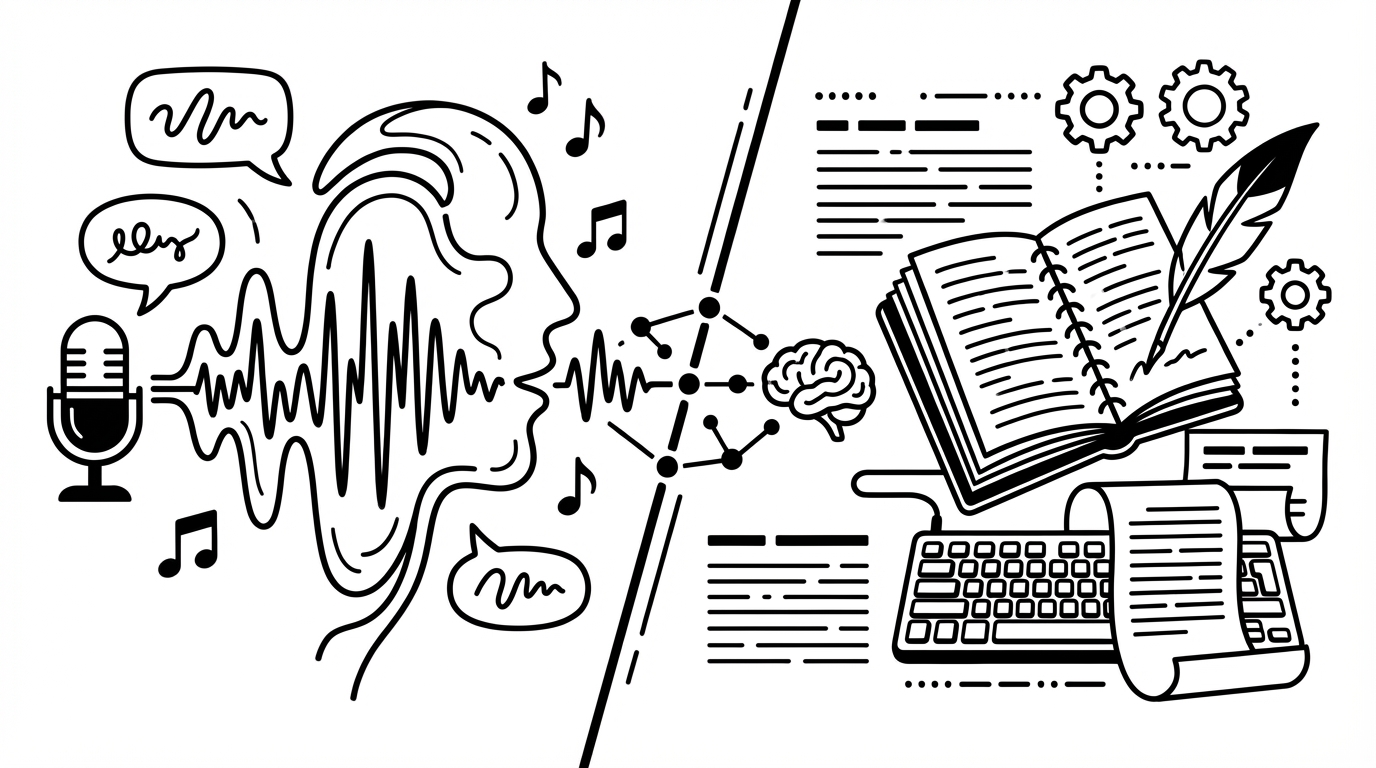
Ask someone to describe their weekend and they'll tell you a story — specific, funny, alive with detail. Ask them to write it down and you'll get something flatter, more formal, and probably less interesting than what they just said out loud.
This happens to almost everyone, and it's worth understanding why. Because once you understand it, you can fix it — and voice dictation is one of the most practical tools for doing so.
The Editing Brain vs The Speaking Brain
When you speak, you produce language in real time. There's no going back, no delete key, no rereading your last sentence and deciding it sounds wrong. You commit to words as they come out and move forward. The result is language that's immediate, direct, and natural.
When you write, your internal editor is active alongside your producing brain. You compose a sentence, read it back, decide it sounds too casual (or too stiff), revise it, read it again, and eventually move on. The result is language that's been processed and polished — which often means it's been drained of the energy it had when it was just a thought.
The editing brain makes your writing more grammatically correct. It also makes it sound like you're trying.
What "Trying" Sounds Like
You can usually feel when someone's writing is trying. The vocabulary shifts slightly formal. The sentence structures become more deliberate. The opinions get hedged. The personality that comes through in conversation doesn't come through in the text.
Compare: "The meeting was unnecessarily long and we didn't actually decide anything" versus "The meeting ran over schedule and did not result in a clear decision." The second version is technically more professional. It's also less honest, less interesting, and less useful to anyone reading it.
The first version is what most people would say out loud. The second is what they might type after their editing brain gets involved.
Why This Matters for Work Communication
The best professional communication sounds like a thoughtful person talking, not a document generating itself. Clients respond better to it. Colleagues trust it more. Readers engage with it longer.
The email that says "I've been thinking about your question and honestly I think the problem is X — here's why" is more effective than "Upon consideration, it appears that the primary issue may be X." Both are professional. Only one sounds like a human being is on the other end.
Voice dictation produces the first version naturally, because that's how you actually speak. The editing pass cleans up the grammar without removing the person behind it.
The Content Creation Implication
This is why the LinkedIn posts and newsletters that perform best sound conversational. The creators who build the largest audiences online are almost universally people whose writing reads like they're talking to you directly. The ones who struggle to grow often write correctly but impersonally.
Voice dictation structures a virtuous cycle for content creation: you speak your genuine thoughts, the transcript captures your actual voice, the editing pass polishes without sanitizing, and the final output sounds like you — which is the thing audiences actually engage with.
The Gap Between How You Talk and How You Write
Think about the last presentation you gave or the last time you explained something complex to a colleague in a meeting. Now think about the last document you wrote covering the same topic. Which one was clearer? Which one would a stranger understand more easily?
For most people, the spoken version wins. The spontaneous explanation that came out of your mouth was better organized and more accessible than the written version you labored over.
Voice dictation bridges that gap. Instead of sitting down to write, you sit down to explain — and the explanation comes out in your natural voice. Then you shape it. The raw material is better because it came from speaking, not composing.
How to Actually Use This
The practical application is simple: for anything where authenticity matters — emails, social posts, client communication, blog posts, cover letters — speak the first draft rather than writing it.
Hold your hotkey, imagine you're explaining this to a person you like and respect, and speak. Don't plan. Don't compose. Just explain.
Then read it back. You'll find that most of what came out is better than what you'd have written. The editing pass is smaller than you'd expect. And the final output sounds like you — which is the whole point.
Your voice is more interesting than your typing. Use it.