Working at the Speed of Thought: What Voice Dictation Actually Unlocks
The real bottleneck in most knowledge work isn't thinking — it's the gap between having a thought and getting it out. Voice dictation doesn't just save typing time. It removes a fundamental constraint.
SERP Transcribe Team
Product
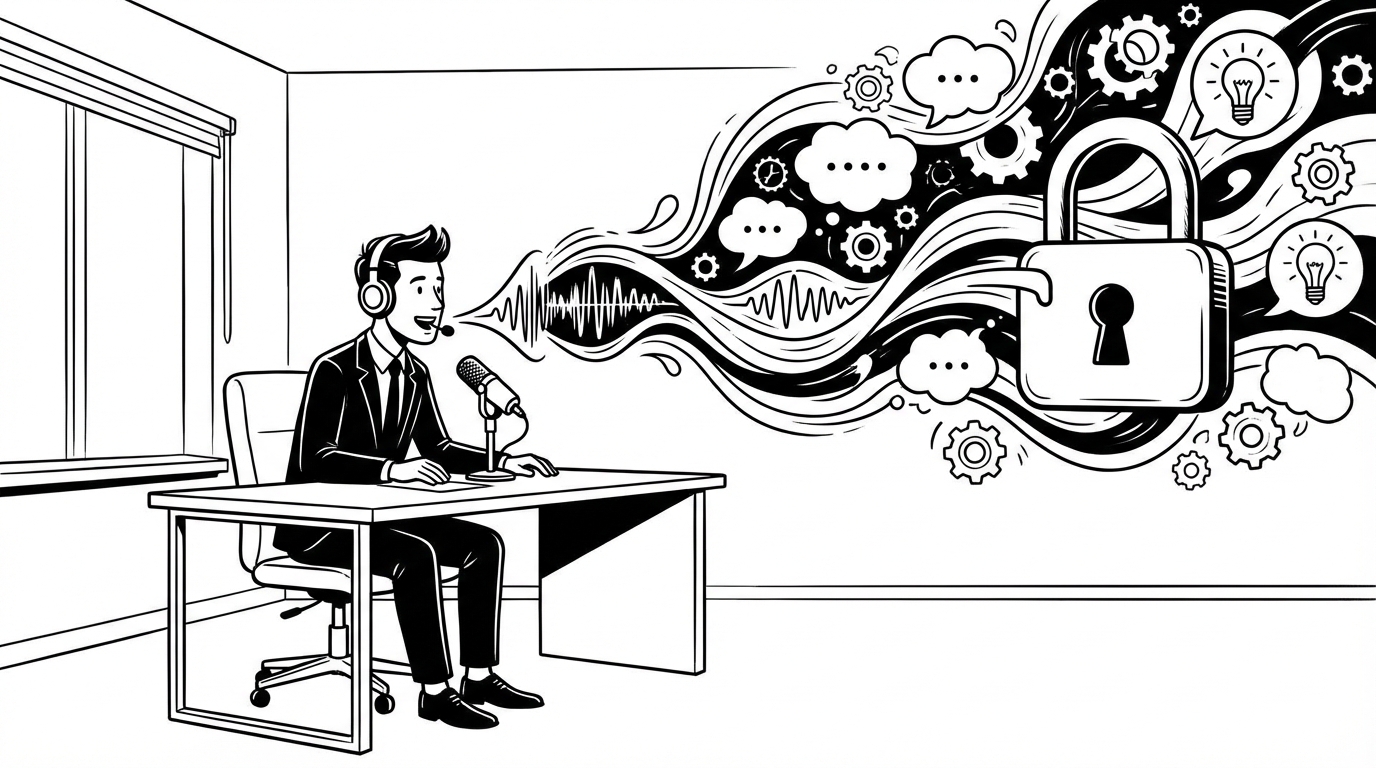
The idea behind 4-hour workweek thinking — and behind deep work, and behind every productivity philosophy that focuses on leverage — is that the way most people work isn't the only way to work. That there are structural inefficiencies in knowledge work that, once identified and removed, free up substantial time and cognitive energy.
Typing is one of those inefficiencies. Not because it's slow in absolute terms, but because it creates a gap between the speed of thought and the speed of output — a gap that shapes how you think, not just how fast you work.
The Output Bottleneck You've Normalized
Most knowledge workers have normalized the experience of thinking faster than they can type. A thought arrives, fully formed. You start typing it. Two more thoughts arrive while you're encoding the first one into keystrokes. By the time you finish the sentence, you've lost something — one of the follow-on thoughts, a nuance that seemed important, the specific phrasing that would have been perfect.
This happens so constantly that most people don't notice it as a bottleneck anymore. It feels like the natural pace of working. It isn't. It's an artifact of the interface between thought and text.
What Changes When the Gap Closes
When you dictate instead of type, the gap between thought and output compresses. A thought arrives and you speak it — immediately, completely, in the natural structure it had before you had time to overthink it.
The effect on quality of output is often surprising. The email you've been avoiding because you weren't sure how to phrase it comes out clearly and naturally on the first try. The complex explanation that would have required multiple drafts when typed emerges coherently on the first pass when spoken. The document that would have taken a morning of focused effort is done in an hour.
This isn't magic. It's the removal of a translation step that was slowing down and distorting your thinking.
The Leverage Equation
The leverage argument for voice dictation is different from the pure speed argument. Speed: you can produce text 2–3x faster. Leverage: voice changes the output ceiling, not just the rate.
When typing is the bottleneck, you optimize for minimizing writing. You write shorter emails than you'd ideally write. You document less thoroughly than you should. You skip the follow-up that would have been valuable. You don't write the blog post because it would take half a day.
When voice removes the bottleneck, the constraint on how much you write essentially disappears. The email is as long as it should be. The documentation is complete. The follow-up gets sent. The blog post gets written in an hour.
The quantity and quality of your communication both increase — not because you're spending more time writing, but because the ceiling on what you can produce in a given time has risen.
The Cognitive Load Liberation
There's a subtler effect that compounds the leverage: reduced cognitive load.
Typing is a dual-task activity — you're composing and encoding simultaneously. The encoding (turning words into keystrokes) is automatic enough that it doesn't require conscious thought, but it consumes cognitive resources nevertheless. The result is that sustained typing is mentally tiring in a way that sustained speaking isn't.
People who switch to voice dictation for their primary writing often report that writing feels less draining. Not because the content is easier, but because the simultaneous tasks of thinking and encoding have been collapsed into one task: thinking.
That cognitive energy is available for something else. For deeper thinking on harder problems. For the creative work that actually requires everything you have. For being less exhausted at the end of the day.
Working at Thought Speed in Practice
The practical expression of all of this: the knowledge worker who dictates their communications, notes, and documents works qualitatively differently from the one who types them.
They're more responsive because responding is fast. They communicate more thoroughly because thoroughness is easy. They document more completely because documentation isn't a tax on their time. They have more mental energy for the work that requires deep focus because the shallow work — the writing, the admin — takes less out of them.
This is the actual unlock. Not just doing the same work faster. Doing the work that previously didn't get done, or got done poorly, because the time and energy cost was too high.
Voice dictation is a small tool. But small tools that remove fundamental friction have outsized effects on how much you can actually do with the hours you have.