How to Write Better Instagram and TikTok Captions With Your Voice
Long captions that tell a story perform better than one-liners — but they take forever to write. Voice dictation makes them fast enough to actually do every time.
SERP Transcribe Team
Product
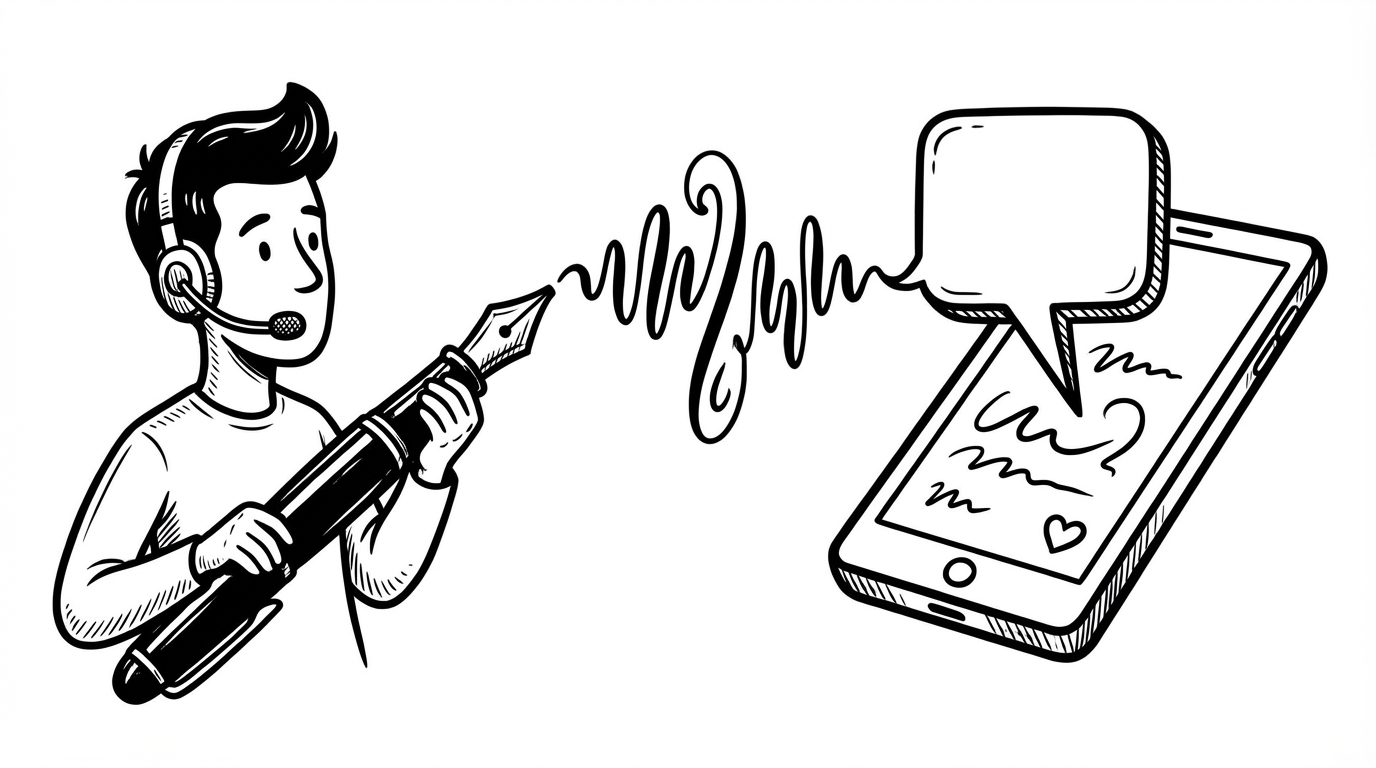
Ask any creator what takes the most time in their posting workflow and the answer is almost always the same: the caption. The photo or video is done. The caption is just sitting there, blank, waiting.
The problem isn't that you don't know what to say. It's that writing it out — especially a longer caption that tells a story or adds real context — feels disproportionately slow relative to everything else in the process.
Voice dictation cuts caption writing time by about 70%. Here's how to make it part of your posting workflow.
Why Longer Captions Perform Better
The data on Instagram captions is pretty consistent: longer captions that tell a story, share a lesson, or ask a genuine question outperform short captions in engagement, saves, and reach. The algorithm rewards content that gets people to stop and read. A caption that makes someone think or feel something does that.
But longer captions take longer to write. So most creators default to short ones, or spend way too long on the occasional long one.
Voice dictation makes long captions practical for every post, not just the ones you've decided to invest in.
The Workflow
Right after you take or finish the content:
- Open your notes app or a drafting tool (Later, Buffer, your phone's Notes)
- Hold the SERP Transcribe hotkey
- Speak the caption — the story behind the shot, the lesson, the thought, whatever fits
- Release, paste, do a quick edit pass
- Add hashtags (type those separately)
- Schedule or post
The moment right after you create the content is the best time to caption it. The context and feeling are fresh. You know why you're posting it. Speak from that place.
What a Good Spoken Caption Sounds Like
Don't try to write. Just talk.
Instead of: "Beautiful sunset walk today :)"
Speak: "Took an hour this evening to go for a walk and actually leave my phone in my pocket. No podcasts, no music, just the walk. I forgot how much I used to do that. The sunset made me stop for a while and just watch it. I don't know when I decided that being productive was more important than moments like this, but I think I'm slowly unlearning it."
That's a caption. Spoken in 25 seconds. It says something real and it makes people feel something. That's what gets saved and shared.
For TikTok Captions
TikTok captions are shorter by default but they still matter — especially the first line, which appears as a preview in the feed. Use voice to draft the caption quickly, then trim to the most compelling version.
For TikTok, the caption often teases what the video is about or adds a layer the video alone doesn't show. Speak that context naturally: "This is the thing I wish someone had told me when I started. Took me three years to figure it out the hard way." Dictated in five seconds, says more than most captions do.
Batching Captions for Multiple Posts
If you batch-create content — shooting several photos or videos in one session to post throughout the week — dictating captions in the same session makes the workflow much cleaner.
After you finish creating, go through each piece of content and dictate a caption for it while the context is still fresh. Paste them all into a notes doc or your scheduling tool. You've front-loaded the writing work so the rest of the week is just scheduling and posting.
This is how creators who post consistently without burning out actually operate. The work is batched, the writing is fast, and execution becomes routine.
Captions for Stories vs. Feed Posts
Stories captions are shorter and more casual — one or two lines. These are the easiest dictation wins. Hold hotkey, speak the one thought, paste it over the image or reel in Instagram's editor.
Feed post captions allow more depth. Use the spoken storytelling approach here — a real thought, a real feeling, something worth reading.
The Creator Who Speaks vs. The Creator Who Types
Here's a useful mental model: the best caption writers on Instagram write the way they talk. You can feel it in the text — it sounds like a person, not a press release.
Voice dictation is, structurally, writing the way you talk. You are literally talking. The editing pass just cleans up the grammar and removes the ums. The voice stays.
That voice is what audiences respond to. Type less, speak more, and your captions will naturally get better along with getting faster.